

Winter session begins amid sharp government–opposition divide
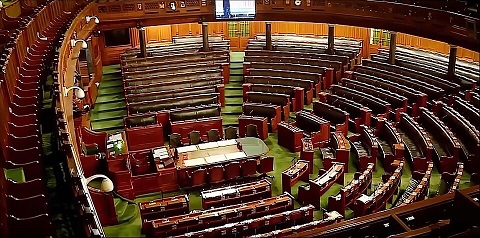
Parliamentary sessions often set the tone for national debate, and the upcoming Winter Session is expected to be no different.
The government convened an all-party meeting on Sunday to seek cooperation for the short but crucial session beginning Monday.
Held at Parliament House, the meeting saw opposition parties list key issues they want debated.
These include the Special Intensive Revision of electoral rolls, the recent Delhi blast, and several foreign policy concerns.
The government outlined its legislative agenda and requested the smooth conduct of proceedings.
However, the Congress later alleged that the shortened schedule signals an attempt to sideline Parliament.
This year’s Winter Session will run from December 1 to December 19, with only 15 sittings.
This marks one of the most condensed sessions in recent years.
Earlier in the day, Parliamentary Affairs Minister Kiren Rijiju met floor leaders from both Houses and urged them to maintain calm.
He said constructive debate, and not disruption, should guide the session.
After the meeting, Congress MP Gaurav Gogoi strongly criticised the government.
He claimed the 15-day schedule will restrict meaningful discussion. He argued that the government is weakening parliamentary traditions and limiting debate on crucial issues.
The opposition demanded discussions on internal security, voter list protection, rising air pollution, economic concerns, natural disasters, and foreign policy decisions.
Senior ministers such as Rajnath Singh, Kiren Rijiju, JP Nadda, and Arjun Ram Meghwal represented the government.
Key opposition leaders included Jairam Ramesh, Gaurav Gogoi, Pramod Tiwari, Derek O’Brien, TR Baalu, Manoj Jha, and others.
The session is set for a strong legislative push with 14 bills on the agenda. The Atomic Energy Bill, 2025, aims to regulate atomic energy use and open space for private participation.
The Higher Education Commission of India Bill, 2025, proposes a central body to promote autonomy, improve accreditation, and enhance regulatory oversight.
Other bills include amendments to the Insolvency and Bankruptcy Code, Company law changes, securities market reforms, GST revisions, and the Health Security & National Security Cess Bill.
The government recently withdrew a proposal concerning Chandigarh regulations after political objections.
As the session opens, both sides appear ready for intense debate, with legislative moves and political clashes likely to dominate the weeks ahead.
Image Credit: Narendra Modi, CC BY 3.0, via Wikimedia Commons
Source: YouTube at 0:28 min
You may also like

Image Reference: https://commons.wikimedia.org/wiki/File:Inside_Indian_Parliament.jpg

Recent Posts
- IndiGo to shift 12 international routes to Navi Mumbai by July 2027
 IndiGo plans to support its expanding network with its Airbus A320, A321 and A321XLR fleet.
 - Cyclone Arnab: Odisha Deploys 225 Rescue Teams
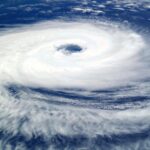 The IMD expects the storm to cross the coast between Bapatla and Visakhapatnam.
 - China develops High-Tech robot designed for Security and CombatA Chinese tech company has introduced a robotic bodyguard built to handle dangerous situations using advanced physical capabilities. The machine reportedly can defend against knife attacks and bring moving vehicles to a halt, showcasing a striking new direction in security technology.
WeRIndia – A News Aggregator
Visit werindia.com for all types of National | Business | World | Politics | Entertainment | Health related news and much more..
Leave a Reply