

New credit card tax rules may come into effect from April 2026

India may soon see significant changes in credit card regulations as the Income Tax Department of India proposes new provisions under the draft Income Tax Rules 2026.
If implemented, these measures will replace several provisions under the Income Tax Rules 1962.
The proposed changes aim to strengthen tax transparency and simplify certain financial procedures.
One of the key proposals focuses on monitoring large credit card transactions. Under the draft rules, banks and credit card issuers must report annual credit card payments of ₹10 lakh or more made through digital modes to the tax department.
Additionally, if a person pays ₹1 lakh or more in cash toward credit card bills during a financial year, the issuing institution must also report it. This move is designed to improve oversight of high-value spending and encourage tax compliance.
Another important change concerns documentation for PAN applications. The department may allow credit card statements issued within the last three months to serve as valid proof of address.
This step could simplify the documentation process for individuals applying for a Permanent Account Number (PAN) and reduce the time required to gather paperwork.
The draft rules also introduce greater flexibility for taxpayers making income tax payments. Credit cards may soon become an approved electronic payment method for paying taxes online.
Until now, taxpayers could only use debit cards or net banking through the Income Tax Department of India portal.
While this change may offer convenience, taxpayers must still consider possible interest or processing charges charged by card issuers.
Meanwhile, the rules also clarify taxation on company-issued credit cards. When an employer provides a credit card and covers the employee’s expenses, the value of those expenses could be treated as a taxable perquisite.
However, the benefit may remain tax-free if the expenses are strictly work-related and the employer maintains proper documentation and verification.
Finally, the draft regulations propose stricter identification requirements. Providing a PAN number would become mandatory when applying for a credit card from any bank or financial institution.
Applications without a PAN would not be processed. Authorities believe this step will help link high-value financial activity to the tax system and reduce misuse of anonymous accounts.
These proposed rules aim to increase financial transparency while also introducing certain conveniences for taxpayers.
If approved, they will take effect from April 1, 2026, and could influence how individuals use credit cards for spending and tax payments.
Image from Pxhere (Free for commercial use / CC0 Public Domain)
Image Published on April 07, 2017
You may also like
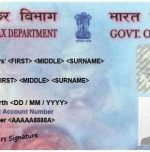



Image Reference: https://pxhere.com/en/photo/1382484
Recent Posts
- WeVOIS: Making Waste Management Smarter
 WeVOIS digitally maps properties and uses RFID tags to track collections.
 - UPI MDR vs Card Charges: What Merchants Will Pay
 The new MDR applies to merchants accepting eligible high-value UPI payments.
 - Indowud NFC: Waste to Wood
 Indowud has further demonstrated the material’s potential through real-world projects.
WeRIndia – A News Aggregator

Visit werindia.com for all types of National | Business | World | Politics | Entertainment | Health related news and much more..