

Authority without a badge
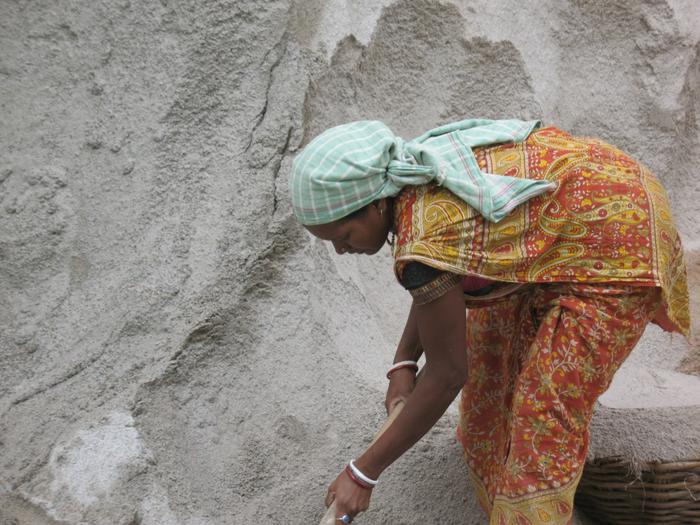
Social change in India often begins quietly, led by people shaped by the injustice they challenge.
Across Andhra Pradesh, district officials preparing bonded labour rescue operations often wait for Thenmoyi to arrive.
She carries no badge or official seal. Yet, her authority comes from survival and trust earned over years of struggle.
When rescue teams reach brick kilns, farms, or construction sites, Thenmoyi is often already there. She speaks calmly to frightened workers in a voice they trust.
As a result, survivors open up quickly. She is not a government official. Instead, she is a bonded labour survivor who now leads a collective of more than 900 survivors across the State. Moreover, her presence often reassures officials and workers alike.
Thenmoyi’s role extends far beyond accompaniment. She joins district teams during rescue operations and explains legal rights to newly freed families.
In addition, she persistently follows up with officials. Her focus remains on securing release certificates, monetary compensation, and rehabilitation support.
In a system where rescues are swift but justice is delayed, she bridges the gap between freedom and recovery.
As India marks 50 years of the Bonded Labour System (Abolition) Act on February 9, 2026, Thenmoyi’s journey reflects the law’s promise and its fragile implementation.
Born into a vulnerable family, Thenmoyi’s father worked as a daily-wage labourer. When she was in Class 7, a labour contractor promised an advance and steady work.
The family was taken to a brick kiln near Bengaluru. There, she faced severe exploitation.
Today, Thenmoyi lives in Chittoor district with her husband, Kannayya, and their two sons. She runs a small fruit and vegetable stall to support her family.
Meanwhile, much of her time is spent following up on bonded labour cases. Her work includes ensuring proper identification, documentation, and continued engagement with district authorities.
For many families, she delivers a crucial message. What they endured was not fate or misfortune. It was a crime. Bonded labour still exists in Andhra Pradesh.
Fresh cases continue to emerge from districts such as Prakasam, Nellore, Chittoor, Tirupati, Annamayya, and Sri Sathya Sai.
Although rescues continue steadily, rehabilitation often stalls. At least 190 identified survivors in the State await release certificates or compensation.
This gap makes Thenmoyi’s leadership essential. In 2025, after the brutal murder of a young boy shocked Andhra Pradesh, she stood beside the child’s mother.
She supported her through police questioning, hospital visits, media interactions, and legal proceedings.
She said the perpetrators believed no one would challenge them, but everything changed once they stood together.
Thenmoyi’s work shows how lived experience can reshape justice at the grassroots.
By standing with survivors long after rescues end, she turns legal promises into lived reality. Her presence challenges silence, delays, and fear.
In doing so, she reminds the system that freedom is incomplete without dignity, accountability, and sustained support.
Image from Pxhere (Free for commercial use / CC0 Public Domain)
Image Published on March 02, 2017
You may also like


Image Reference: https://pxhere.com/en/photo/929172
Recent Posts
- Night Vision Problems? Protect Your Eyes Naturally with these tips
 A balanced diet, regular eye care and safer driving habits support healthy vision.
 - EPF Withdrawal Rules Simplified: Check Limits and Eligibility
 The simplified framework provides greater flexibility for accessing EPF savings.
 - CSIR-NCL Recruitment 2026: 24 MTS Vacancies
 CSIR-NCL will conduct a competitive written examination for provisionally eligible candidates.
WeRIndia – A News Aggregator
Visit werindia.com for all types of National | Business | World | Politics | Entertainment | Health related news and much more..