

India’s Growth-Ranking Paradox
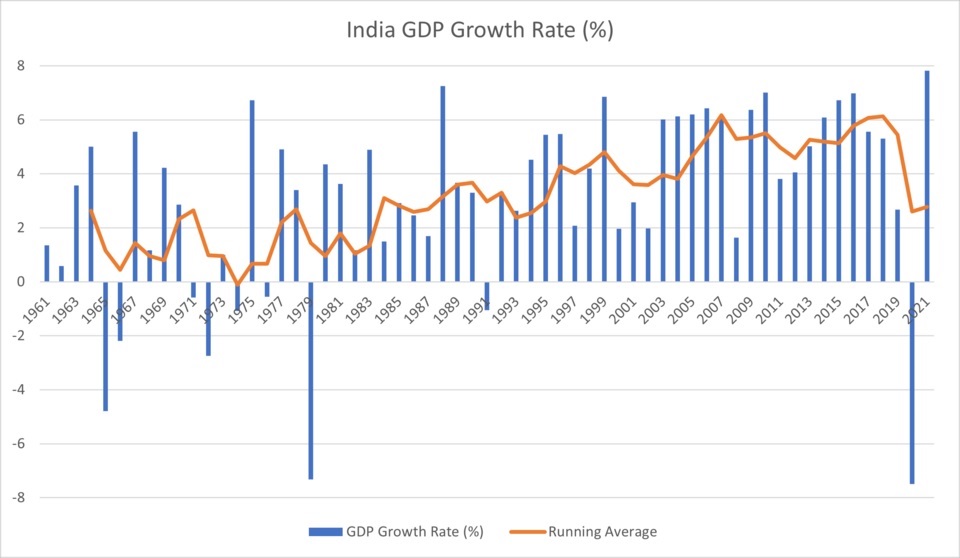
India’s economy continues to grow strongly, yet its global economic ranking has slipped recently.
This apparent contradiction has sparked interest, with China’s state-run Global Times examining how currency movements and GDP measurement methods explain the surprising shift.
India recorded 7.8% year-on-year real GDP growth during the April-June quarter.
However, its economy is estimated at about USD 3.92 trillion for the 2025-26 financial year. That figure could place India sixth among the world’s largest economies.
At first glance, the two developments appear difficult to reconcile. However, the difference lies in how economic growth and global rankings are calculated.
The 7.8% figure measures growth in real GDP. In contrast, global rankings generally compare nominal GDP in US dollars.
Currency movements can therefore significantly affect India’s position. A weaker rupee reduces the dollar value of India’s economy, even when domestic production continues to expand.
Consequently, a lower ranking does not necessarily indicate weaker economic performance.
Global Times cited figures reported by Fortune India, based on the IMF’s April 2026 World Economic Outlook. These estimates put India’s nominal GDP at around USD 3.92 trillion for 2025-26.
India had previously been described as the world’s fourth-largest economy after overtaking Japan.
It was also projected to move past Germany and reach third place by 2030. However, currency depreciation has affected its dollar-denominated position.
Importantly, the underlying growth story remains strong. A 7.8% real growth rate indicates continued expansion despite global challenges, including geopolitical tensions and trade pressures.
The ranking debate also highlights India’s growing integration with the world economy. As India expands, its dependence on international markets, investment and global supply chains is increasing.
Therefore, short-term exchange-rate movements can alter India’s position in dollar-based rankings.
However, these short-term currency changes cannot fully reflect India’s economic strength, sustained growth, productivity gains, investment trends, or long-term development potential.
Image Credit: Synopsis19117, CC BY-SA 4.0, via Wikimedia Commons
You may also like




Image Reference: https://commons.wikimedia.org/wiki/File:GDP_Growth_Rate_India_(World_Bank_data).png
.png )
Recent Posts
- Night Vision Problems? Protect Your Eyes Naturally with these tips
 A balanced diet, regular eye care and safer driving habits support healthy vision.
 - EPF Withdrawal Rules Simplified: Check Limits and Eligibility
 The simplified framework provides greater flexibility for accessing EPF savings.
 - CSIR-NCL Recruitment 2026: 24 MTS Vacancies
 CSIR-NCL will conduct a competitive written examination for provisionally eligible candidates.
WeRIndia – A News Aggregator

Visit werindia.com for all types of National | Business | World | Politics | Entertainment | Health related news and much more..
Leave a Reply