

SC puts ethanol allocation dispute on hold amid E20 debate
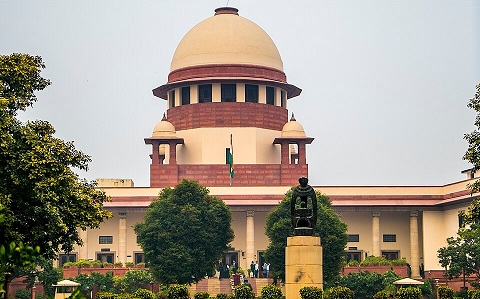
India’s transition toward cleaner transport fuels continues to shape legal, policy, and consumer discussions across the country.
The Supreme Court on Tuesday directed both sides to maintain the status quo in a dispute over ethanol supply allocation to oil marketing companies.
The order came while a bench of Justices MM Sundresh and Sheel Nagu heard a petition filed by Bharat Petroleum Corporation Ltd (BPCL).
The company challenged a Karnataka High Court direction that required it to increase ethanol allocation for the 2025-26 supply cycle.
The case revolves around the Centre’s ethanol blending programme, which mixes 20 per cent ethanol with petrol to produce E20 fuel.
The initiative aims to reduce dependence on fossil fuels and promote cleaner energy. However, the allocation process has now reached the country’s highest court, adding a legal dimension to the programme.
Meanwhile, Attorney General R Venkataramani, appearing for the Centre, defended the existing policy before the Supreme Court. He described the ethanol blending initiative as an ongoing experiment.
Therefore, he argued that its overall impact would become clearer by next year. He also informed the court that the ethanol allocation exercise concluded in October 2025.
According to the government, authorities communicated allocations to 378 suppliers for a total of 1,050 crore litres of ethanol.
Moreover, suppliers had already delivered around 680 crore litres by June 18. The Centre maintained that the allocation process had achieved finality and should not face further disruption.
The government has steadily expanded ethanol blending after amending the National Policy on Biofuels in 2022. Consequently, India achieved its target of blending 20 per cent ethanol with petrol.
Although the Centre has not officially approved a higher blending ratio, discussions have continued within the government. Several Union ministers, including Nitin Gadkari and Hardeep Singh Puri, have publicly suggested increasing ethanol content to as much as 85 per cent in the future.
However, the E20 programme continues to generate debate among vehicle owners. Many users claim that higher ethanol content reduces fuel efficiency and may affect older vehicles. In contrast, the government has consistently rejected those concerns.
It has been stated that available evidence does not establish any direct link between E20 fuel and mechanical damage in automobiles.
The Supreme Court’s intervention now places the allocation dispute under judicial scrutiny while the broader policy continues to evolve.
Image Credit: Subhashish Panigrahi, CC BY-SA 4.0, via Wikimedia Commons
You may also like



Image Reference: https://commons.wikimedia.org/wiki/File:Supreme_Court_of_India_01.jpg

Recent Posts
- Opposition Plans Supreme Court March Over ‘Vote Chori’ Row
 Earlier, leaders of several INDIA bloc parties had marched from Parliament to Vijay Chowk.
 - Indian Navy to Commission Mangrol, Boosting Coastal Defence
 Mangrol incorporates more than 80 per cent indigenous content.
 - Eden Gardens Sets Guinness World Record on MahalayaMahalaya celebrations at Kolkata’s Eden Gardens made history as 3,000 dhakis played the dhak together, setting a Guinness World Record. The grand event on October 10 marked the beginning of Devi Paksha and the countdown to Durga Puja.
WeRIndia – A News Aggregator

Visit werindia.com for all types of National | Business | World | Politics | Entertainment | Health related news and much more..