

Beyond the limits: Neelima Arora conquers Everest
The greatest victories often begin with a decision to challenge what seems impossible.
For Neelima Arora, that challenge took her to the highest point on Earth despite a lifelong medical limitation.
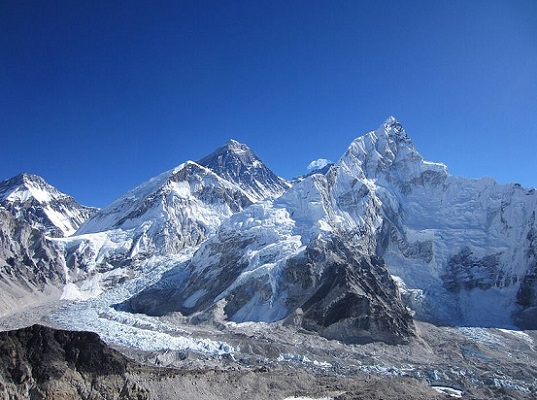
On May 25, 2026, Neelima reached the summit of Mount Everest at 8,849 metres. She became the first woman in the world with thalassaemia minor to achieve the feat.
The climb was remarkable not only because of Everest’s extreme conditions, but also because doctors had repeatedly warned her about the dangers.
A BTech graduate from IIT Mumbai, Neelima grew up in Jaipur and later worked as a silicon validation engineer in California.
Mountaineering was never part of her original plans. However, a knee surgery changed her outlook. During recovery, she began hiking and soon progressed to serious alpine climbing.
Her achievements quickly multiplied. She summited Mont Blanc, Matterhorn, Cotopaxi, Chimborazo, Aconcagua and Ama Dablam.
In 2025, she became the first Indian woman over 40 to climb Ama Dablam, setting the stage for an even greater challenge.
Everest brought an added medical hurdle. Thalassaemia minor can affect the body’s ability to transport oxygen efficiently.
At extreme altitude, where oxygen is already severely limited, this created an enormous challenge.
Therefore, Neelima trained beyond conventional preparation. She used a high-altitude simulation tent, slept in low-oxygen conditions and carried heavy loads across California’s mountains. Still, Everest tested her severely.
During the expedition, she developed high-altitude pulmonary oedema, or HAPE, three times.
Doctors urged her to descend, while dangerously low oxygen levels made even simple activities difficult. Each time, she recovered at lower altitude and returned to the climb.
Meanwhile, her family endured weeks of uncertainty. Her children and parents worried as communication from the mountain remained limited.
Yet Neelima continued, driven by a desire to discover what remained possible despite her condition.
Finally, after repeated setbacks, she reached the summit. She spent nearly 30 minutes at the top, taking in the extraordinary moment.
For Neelima, Everest was never simply another achievement. It was a personal statement about perseverance.
Her journey now offers hope to people facing illness, age, setbacks or self-doubt. Her message is simple: limitations may shape the journey, but they do not have to determine its destination.
Image Credit: Thisisbadri, CC BY-SA 4.0, via Wikimedia Commons
You may also like


Image Reference: https://commons.wikimedia.org/wiki/File:View_of_Mount_Everest.jpg

Recent Posts
- Navratri Fasting 2026: Eat Right, Stay Energised
 Fasting requires caution for people with diabetes, heart conditions or other medical problems.
 - GST Council Pushes Faster Compliance and Refunds
 The GST Council is examining measures to make GST compliance easier for small taxpayers.
 - SBI SCO Recruitment 2026 for Wealth Management posts
 Candidates must register and pay the application fee online through the SBI recruitment portal.
WeRIndia – A News Aggregator

Visit werindia.com for all types of National | Business | World | Politics | Entertainment | Health related news and much more..