

Govt rules out pure petrol comeback
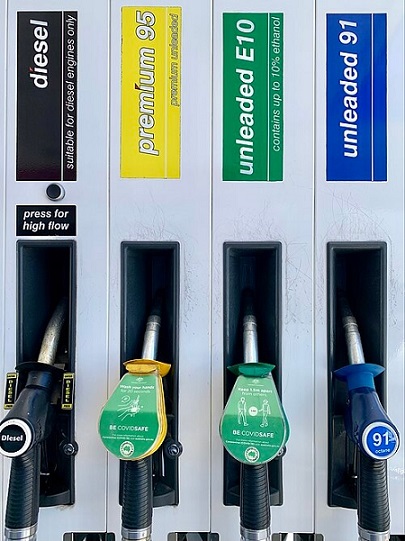
India’s fuel policy has entered a new phase with the nationwide rollout of E20 petrol.
While some vehicle owners continue raising concerns over ethanol-blended fuel, the Centre has made it clear that E20 will remain the country’s standard petrol.
The government has also rejected demands to sell pure petrol (E0) and E10 alongside E20, citing operational and economic challenges.
In a note issued on July 10, the Ministry of Petroleum and Natural Gas said maintaining three petrol variants across the country is impractical.
India operates an extensive fuel distribution network with over one lakh petrol pumps, along with refineries, depots, storage facilities, and pipelines.
Therefore, supplying E0, E10, and E20 together would require separate tanks, transport systems, and infrastructure, significantly increasing costs.
Moreover, the government dismissed comparisons with premium petrol. It explained that premium fuel is sold in limited volumes and does not require a dedicated nationwide supply chain.
Consequently, the existing model cannot be applied to regular petrol distribution.
The Centre also highlighted the large investments already made under the ethanol blending programme. Factories, warehouses, and logistics systems have been developed to support higher ethanol production.
According to the government, reversing the policy and restoring E10 as the standard fuel would leave ethanol plants underutilised. As a result, farmers, cooperatives, companies, and banks linked to the sector could face financial losses.
India is expected to achieve its target of 20 per cent average ethanol blending between November 2025 and June 2026. The blending level stood at 19.2 per cent during the previous year.
Meanwhile, owners of older vehicles have expressed concerns about possible engine damage from E20 petrol.
However, the government maintains that the fuel is safe even for vehicles originally designed for E10.
Before introducing E20, authorities consulted automobile manufacturers, component suppliers, testing agencies, and technical experts. They also evaluated engine durability, fuel systems, emissions, and performance.
Supporting its position, the government cited data from Maruti Suzuki and Hero MotoCorp. Maruti serviced 28.4 million vehicles during 2025-26, including 15 million older vehicles not designed for E20.
Despite that, the company reportedly received no complaints related to corrosion or component damage caused by E20. Hero MotoCorp reported similar findings.
The government admitted E20 may reduce fuel efficiency by around 3 to 5 per cent.
However, it argued that higher octane fuel, lower crude oil imports, and reduced emissions outweigh the marginal mileage loss.
Image Credit: Kgbo, CC BY-SA 4.0, via Wikimedia Commons
You may also like



Image Reference: https://commons.wikimedia.org/wiki/File:Social_distancing_sign_on_petrol_station_bowser_during_the_COVID-19_pandemic_in_Australia.jpg

Recent Posts
- Everyday Habits That May Harm Your Brain Health
 Adequate sleep allows the brain to recover, process information and support memory.
 - Top 10 investment schemes in India that benefit from compounding
 A compound interest calculator can help estimate how investments may grow over time.
 - DGFT Hyderabad Recruitment 2026: Salary ₹60,000 Per Month
 The recruitment is for two Young Professional vacancies in Hyderabad, with a monthly remuneration of ₹60,000.
WeRIndia – A News Aggregator

Visit werindia.com for all types of National | Business | World | Politics | Entertainment | Health related news and much more..