

SC pushes ‘No insurance, no fuel’ pilot to boost road safety
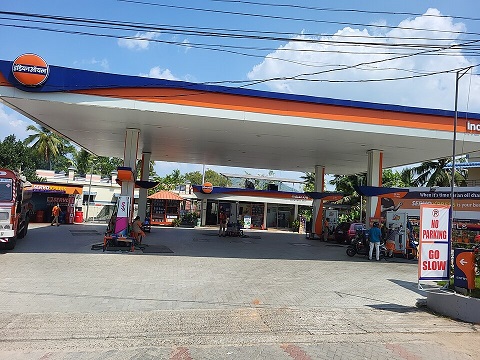
Road safety remains a major concern as millions of vehicles continue to operate without valid insurance.
To improve compliance, the Supreme Court has proposed several measures aimed at strengthening third-party motor insurance coverage.
The apex court has directed the Centre to launch a pilot ‘no insurance, no fuel’ project. Additionally, it ordered an increase in the mandatory third-party insurance period for new vehicles.
If implemented, new cars will require four years of third-party insurance, while new two-wheelers will need six years. Earlier, the mandatory coverage stood at three years for cars and five years for two-wheelers.
The directions came while hearing the National Insurance Co. Ltd. versus Smt Thungala Dhana Laxmi case involving motor accident compensation.
Although the insurer’s appeal was dismissed, the Bench of Justices Sanjay Karol and Augustine George Masih addressed broader concerns about uninsured vehicles and road accident compensation.
The Court observed that despite its directions issued eight years ago, a significant number of vehicles still remain uninsured. It noted that around 56% of vehicles on Indian roads lack valid insurance.
According to a Parliamentary Standing Committee report, nearly 16.54 crore of India’s 30.48 crore vehicles are uninsured.
Consequently, many accident victims struggle to receive timely compensation and often face lengthy legal proceedings.
The judges also highlighted that India recorded more than 4.87 lakh road accidents in 2024. Therefore, they stressed the need for stronger enforcement to protect victims and improve compliance with the Motor Vehicles Act.
Besides extending insurance validity, the Court recommended integrating Automatic Number Plate Recognition (ANPR) cameras, the Insurance Information Bureau database, and the VAHAN portal.
This system would help identify uninsured vehicles automatically and generate e-challans. Furthermore, police personnel could use handheld devices or mobile applications to verify insurance status instantly.
The proposed ‘no insurance, no fuel’ model could encourage vehicle owners to keep their policies active.
However, the Court did not authorise petrol pumps to deny fuel immediately. Such a system would require fresh rules, technological integration, and clear operational guidelines before implementation.
For vehicle owners, the message is clear. Keeping third-party insurance valid is essential. If the proposal becomes reality, an expired policy could affect fuel access.
Ultimately, the initiative aims to improve insurance coverage, enhance road safety, and ensure better financial protection for accident victims while creating a more accountable transport ecosystem.
Image Credit: Athulvis, CC BY-SA 4.0, via Wikimedia Commons
You may also like


Image Reference: https://commons.wikimedia.org/wiki/File:Indian_Oil_Fuel_Filling_Station_NH-47_(Sri_Narayan_Fuels).jpg
.jpg)
Recent Posts
- Everyday Habits That May Harm Your Brain Health
 Adequate sleep allows the brain to recover, process information and support memory.
 - Top 10 investment schemes in India that benefit from compounding
 A compound interest calculator can help estimate how investments may grow over time.
 - DGFT Hyderabad Recruitment 2026: Salary ₹60,000 Per Month
 The recruitment is for two Young Professional vacancies in Hyderabad, with a monthly remuneration of ₹60,000.
WeRIndia – A News Aggregator

Visit werindia.com for all types of National | Business | World | Politics | Entertainment | Health related news and much more..