

SC Tightens Action on Unpaid Traffic Fines
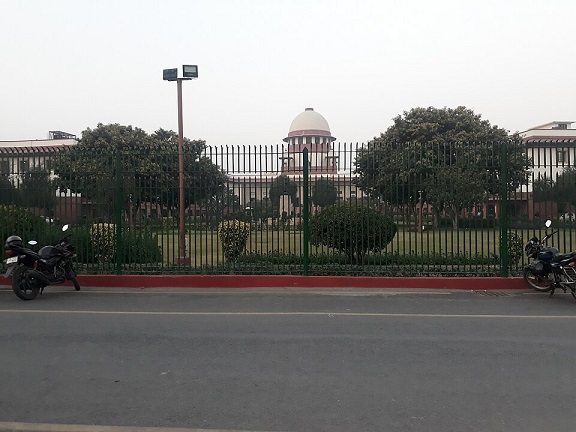
Road safety enforcement is moving beyond issuing challans, with authorities now facing greater pressure to recover unpaid penalties.
The Supreme Court has directed states and Union Territories to restrict vehicle-related services for motorists with outstanding traffic fines.
The order aims to make electronic enforcement more effective and ensure that penalties do not remain unpaid.
A bench comprising Justices JB Pardiwala and KV Viswanathan said vehicles with pending e-challans should be blacklisted on the central Parivahan portal.
As a result, owners could face restrictions on selling or transferring such vehicles until the dues are cleared.
The court also ordered authorities to freeze several online vehicle services for defaulters. These include registration renewals, duplicate registration certificates and changes to the registered owner’s address.
Moreover, fitness certificates must be withheld until all pending traffic fines are paid.
The directions also extend to driving licences in cases involving repeated violations. Authorities have been asked to suspend licences and stop their renewal when multiple traffic offences remain unresolved.
In addition, the court said vehicles with unpaid fines should not receive Pollution Under Control certificates.
This measure could further limit the ability of persistent offenders to keep their vehicles legally operational.
The Supreme Court’s intervention follows concerns over the gap between issuing e-challans and actually recovering penalties.
The court was informed that authorities had issued outstanding e-challans worth ₹49,194.05 crore. However, only ₹26,175.05 crore had been recovered.
The Bench stressed that issuing challans in large numbers would have limited impact without effective recovery mechanisms.
The directions link traffic enforcement with essential vehicle and driving licence services, increasing pressure on offenders to clear outstanding fines.
The measures will require authorities to strengthen the recovery of unpaid traffic fines.
Meanwhile, vehicle owners with outstanding penalties may face restrictions on registration, transfers, certificates and other services until their dues are fully cleared.
Image Credit: Pinakpani, CC BY-SA 4.0, via Wikimedia Commons
You may also like


Image Reference: https://commons.wikimedia.org/wiki/File:Supreme_Court_of_India_front_view_04.jpg

Recent Posts
- HealthFab: Sustainable Period Care
 HealthFab was founded by Kiriti Acharjee, Saurav Chakraborty and Satyajit Chakraborty, all from Assam.
 - Smart Ways to Manage Medical Expenses
 Unexpected medical expenses can disrupt even a carefully planned household budget. When a ₹5 lakh hospital bill leaves a ₹3 lakh shortfall after insurance settlement, families may feel pressured to…
 - YLEM: Turning Waste into Sustainable Design
 New Delhi-based design and research studio that transforms discarded materials into valuable, functional products.
WeRIndia – A News Aggregator

Visit werindia.com for all types of National | Business | World | Politics | Entertainment | Health related news and much more..
Leave a Reply