

India overhauls visa rules, simplifies entry for foreign visitors
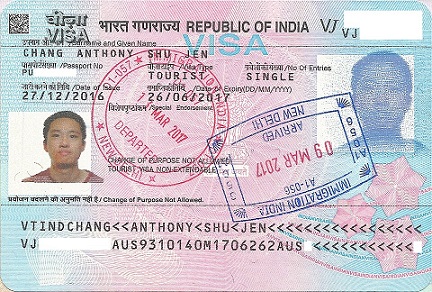
India is making international travel simpler as it moves towards a more streamlined visa system.
The latest reforms aim to reduce paperwork, clarify travel permissions and encourage greater foreign participation in tourism, education, healthcare and business.
The Ministry of Home Affairs (MHA) has reduced the number of major visa categories from 13 to nine. Similarly, subcategories have dropped from 49 to 23.
Moreover, application forms will now contain 65–70% fewer fields, making the process quicker and easier for applicants.
A key change is the replacement of the Tourist Visa with the Visitor Visa. This category now covers holidays, business meetings, medical consultations and short-term courses.
It offers two options. V-1 permits multiple entries within a 30-day period. Meanwhile, V-2 caters to longer visits, with validity options of one, five or 10 years.
The revised Student Visa framework also introduces two categories. S-1 covers school, undergraduate and postgraduate education.
In contrast, S-2 accommodates research scholars, visiting faculty, interns and academic exchange participants.
Medical travellers will also benefit from clearer classifications. M-1 covers treatments outside AYUSH systems, while M-3 applies to AYUSH-based healthcare. Additionally, accompanying attendants can apply under M-2 or M-4, depending on the patient’s visa category.
For employment, the Work Visa covers foreign nationals hired by Indian companies and organisations. This also includes employees of NGOs and missionary institutions.
Business travellers have two options under the revised framework. B-1 covers long-term business activities. However, B-2 addresses short-term assignments involving investments, conferences, sporting events, cultural programmes and film or advertising shoots.
The remaining categories include Diplomatic, Journalist, Official and Miscellaneous Visas. Together, these nine categories create a more purpose-driven system.
According to the MHA, the reforms seek to boost foreign tourist arrivals, medical value travel and international student enrolment.
Furthermore, they aim to attract researchers, investors and business professionals.
Thus, the changes mark an important step towards making India more accessible to international visitors.
By reducing procedural hurdles and simplifying classifications, the government hopes to strengthen India’s global tourism, education and economic connections.
Image Credit: Shujenchang, CC0 1.0, via Wikimedia Commons
You may also like




Image Reference: https://commons.wikimedia.org/wiki/File:Indian_Tourist_Visa_2016_stamped.jpg

Recent Posts
- BECIL Recruitment 2026: 23 Data Entry Operator Posts
 Candidates should carefully review the advertisement before applying.
- India overhauls visa rules, simplifies entry for foreign visitors
 The Ministry of Home Affairs (MHA) has reduced the number of major visa categories from 13 to nine.
- Teen Gets ₹2.30 Crore BMW for Exam SuccessA teenager from West Bengal has received an extraordinary reward for his academic performance. His father gifted him a luxury BMW M4 Competition worth ₹2.30 crore after he performed well in his Class 9 half-yearly examinations.
WeRIndia – A News Aggregator
Visit werindia.com for all types of National | Business | World | Politics | Entertainment | Health related news and much more..
Leave a Reply