

Delhi clears three key Metro corridors under Phase V(A)
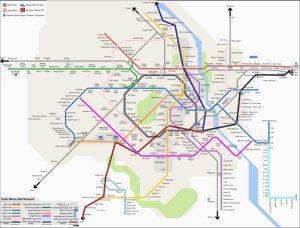
Urban mobility in Delhi is set for a major upgrade. The Delhi government, led by Chief Minister Rekha Gupta, has approved three new Metro corridors under Phase V(A).
The move aims to ease congestion, improve air quality, and strengthen public transport citywide.
The new corridors will connect high-traffic and strategic locations. These include RK Ashram Marg to Indraprastha via Central Vista, Tughlakabad to Kalindi Kunj, and Aerocity to Indira Gandhi Domestic Terminal-1.
As a result, commuters will gain faster and more reliable travel options. Moreover, the expansion will link administrative hubs, residential zones, and the IGI Airport area.
The RK Ashram Marg–Indraprastha corridor stands out as a key project. It will span 9.913 kilometres and include nine proposed stations.
Importantly, the line will pass through Central Vista, Shivaji Stadium, Central Secretariat, CCS Buildings, India Gate, War Memorial-High Court, Baroda House, Bharat Mandapam, and Indraprastha. Therefore, it will directly serve major government and cultural centres.
Officials estimate that nearly 60,000 government employees and around two lakh daily commuters will benefit.
The total project cost stands at ₹9,570.40 crore. Of this, the Delhi government will contribute ₹2,337.24 crore.
Initially, planners proposed this corridor as part of the Green Line. However, authorities have now merged it with the Magenta Line extension.
Consequently, the Magenta Line will expand to nearly 89 kilometres, surpassing the Pink Line in length.
The Krishna Park Extension-RK Ashram Marg stretch of the Magenta Line is likely to open in phases next financial year.
Meanwhile, the RK Ashram-Indraprastha section is expected to become operational by 2028. Overall, officials aim to complete the entire project by the end of that year.
Chief Minister Gupta thanked Prime Minister Narendra Modi for his support. She noted that the expansion aligns with his “7-C Vision” for mobility.
These include Common, Connected, Convenient, Congestion-free, Charged, Clean, and Cutting-edge transport.
Ultimately, the project supports long-term goals, including environmental protection and achieving net-zero emissions.
Image Credit: RaviC, CC BY-SA 4.0, via Wikimedia Commons
You may also like
Image Reference: https://commons.wikimedia.org/wiki/File:Delhi_metro_rail_network_%2B_RRTS.svg

Recent Posts
- FSSAI Tightens Food Safety Rules for Perishable Items
 Indian Railways and its regional directors have also been directed to ensure vigilance.
 - Cancer drug prices set for major cut as NPPA caps trade margins
 The move could offer meaningful financial relief to cancer patients, particularly those requiring prolonged treatment.
 - Sudarsan Pattnaik creates Unique 10-Foot Maa Durga installationCelebrating the spirit of Durga Puja through creativity, renowned sand artist and Padma Shri awardee Sudarsan Pattnaik has created a stunning 10-foot installation of Maa Durga at Puri Sea Beach. Crafted in just five hours using 8 tonnes of sand, 22 varieties of vegetables and 10 types of fruits, the artwork conveys his heartfelt festive wishes and showcases the beauty of artistic innovation.
WeRIndia – A News Aggregator
Visit werindia.com for all types of National | Business | World | Politics | Entertainment | Health related news and much more..