

Delhi Metro Phase IV gets green signal for major expansion
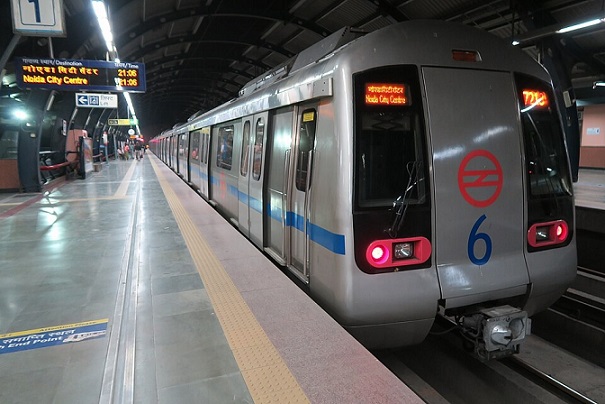
Delhi continues to strengthen its public transport backbone with a renewed focus on Metro expansion.
Under Chief Minister Rekha Gupta, the Delhi Government has approved funding for the remaining three corridors of Metro Phase IV.
This decision marks a major step toward improving urban mobility. Moreover, it reflects the government’s push for sustainable and efficient transport solutions.
According to an official release, the Delhi Government has released its financial share for the projects. These three corridors are expected to be completed within four years.
Together, they aim to enhance connectivity across Delhi and parts of NCR.
The three Phase IV corridors will have a combined length of 47.225 kilometres. The total estimated project cost is ₹14,630.80 crore. Out of this, the Delhi Government will contribute ₹3,386.18 crore.
The first corridor will run from Lajpat Nagar to Saket G-Block. It will be 8.385 kilometres long. Additionally, it will have eight elevated Metro stations.
The second corridor will connect Inderlok with Indraprastha. This stretch will span 12.377 kilometres. It will include ten stations, with one elevated and nine underground.
Importantly, these two corridors are part of a combined financial framework. Their total project cost stands at ₹8,399.81 crore. The Delhi Government’s share in this combined project will be ₹1,987.86 crore.
The third and longest corridor will run from Rithala to Kundli. It will extend 26.463 kilometres and include 21 stations. Furthermore, this corridor will improve connectivity with Haryana.
The Rithala–Kundli corridor is estimated to cost ₹6,230.99 crore. Delhi’s share will be ₹1,398.32 crore. Meanwhile, ₹545.77 crore will be spent in Haryana.
These corridors will pass through key residential, commercial, and industrial areas. As a result, large sections of northern, central, and southern Delhi will benefit.
The tendering process is currently underway. Basic construction work has already started on some stretches. Consequently, traffic pressure on roads is expected to reduce over time.
Chief Minister Rekha Gupta stated that these projects will modernise Delhi’s transport network.
She added that Metro expansion will save time, reduce private vehicle use, and control pollution.
Therefore, the initiative supports Delhi’s vision of becoming a world-class city.
Image Credit: WillaMissionary, CC0 1.0, via Wikimedia Commons
You may also like


Image Reference: https://commons.wikimedia.org/wiki/File:DelhiMetroBlueLineMitsubishiRotem.JPG

Recent Posts
- Smog-Eating Roads: A New Approach to Tackling Air Pollution
 Photocatalytic coatings are a potential supplementary measure, not a complete solution to urban air pollution.
 - Nagastra-1R: India Boosts Precision Strike Power
 Nagastra-1R carries a one-kilogram high-explosive fragmentation warhead designed for soft-skinned targets.
 - Forest Worker Saves Elephants from Train CollisionA major railway accident was narrowly avoided in West Bengal after forest worker Akash Kerketta alerted authorities to a herd of elephants on the Bagdogra-Naxalbari railway line. His swift action helped move the elephants to safety before the approaching Sikkim Mahananda Express could collide with them.
WeRIndia – A News Aggregator
Visit werindia.com for all types of National | Business | World | Politics | Entertainment | Health related news and much more..