

India’s Population Shift
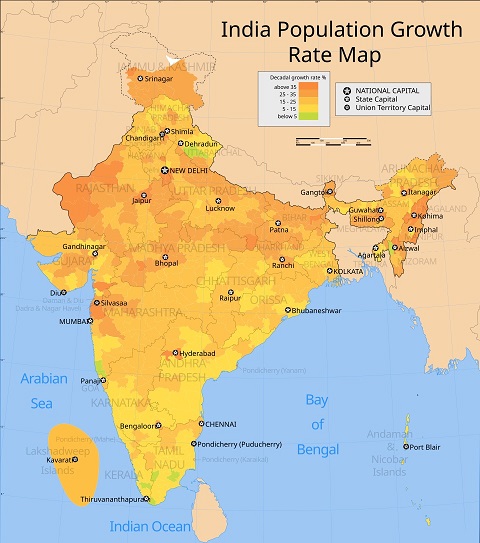
India’s demographic story is entering a new chapter. On World Population Day 2026, the focus is no longer on controlling population growth but on preparing the country’s youth for the future.
With one of the world’s youngest populations and fertility already below replacement level, India now faces the challenge of ensuring better education, healthcare, employment, and equal opportunities for its citizens.
India’s Total Fertility Rate (TFR) has declined to 1.93 children per woman in 2026, remaining below the replacement level of 2.1.
This marks a continuation of a trend that began in 2020, when the country’s fertility rate first fell below replacement level.
Recent findings from the National Family Health Survey (NFHS-6) and the Sample Registration System (SRS) 2024 also indicate sustained improvements in maternal and child health alongside lower fertility.
Despite the decline in births, India’s population continues to grow because of “population momentum.”
A large share of the population is currently in its reproductive years, which keeps overall numbers rising even as families have fewer children.
After delays caused by the COVID-19 pandemic, the next Census is expected in early 2027, when India’s population is projected to be close to 1.5 billion.
According to the United Nations World Population Prospects, India’s population will continue increasing for several more decades before reaching its peak of around 1.7 billion in 2062.
However, growth is expected to flatten soon after. From 2063 onwards, the country is projected to begin recording an annual population decline of about 115,000 people as lower birth rates gradually outweigh the effects of population momentum.
India’s age structure will also undergo a significant transformation. Around 2060, the crude death rate is expected to match and eventually exceed the birth rate.
By then, the number of people aged 65 years and above is projected to surpass the population of children below 14 years, signalling the country’s transition towards an ageing society.
Although India’s population is expected to decline by around 12 per cent from its peak by 2100, the United Nations projects that the country will remain the world’s most populous nation throughout the century.
The country’s biggest challenge, therefore, is not population size but ensuring that its young population has the skills, opportunities, and support needed to drive future growth.
Image Credit: w:user:Planemad, CC BY-SA 3.0, via Wikimedia Commons
You may also like




Image Reference: https://commons.wikimedia.org/wiki/File:India_decadal_growth_rate_map_en.svg

Recent Posts
- YLEM: Turning Waste into Sustainable Design
 New Delhi-based design and research studio that transforms discarded materials into valuable, functional products.
 - Delhi’s Winter Pollution Plan
 Vehicles without valid Pollution Under Control certificates will not receive petrol, diesel, CNG or LPG at fuel stations.
 - FSSAI Plans Ban on Added Sugars in Baby FoodFSSAI plans to ban added fructose and sucrose in baby food for infants up to six months old. The proposal aims to safeguard infant nutrition and promote healthier feeding practices.
WeRIndia – A News Aggregator
Visit werindia.com for all types of National | Business | World | Politics | Entertainment | Health related news and much more..