

VB–G RAM G Act gets Presidential nod
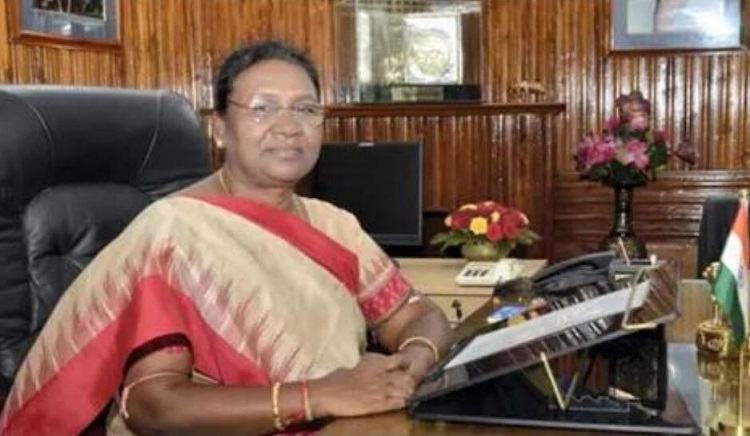
India’s rural employment framework has entered a new phase with President Droupadi Murmu granting assent to the Viksit Bharat-Guarantee for Rozgar and Ajeevika Mission (Gramin) Bill, 2025.
The approval formally converts the Bill into law, marking a major shift in how wage employment and rural development are envisioned and delivered across the country.
The legislation, earlier passed by Parliament, seeks to move rural employment beyond a standalone welfare measure.
Instead, it positions guaranteed work as an integrated tool for empowerment, inclusive growth, and long-term asset creation.
The Act aligns closely with the national vision of Viksit Bharat @2047, focusing on resilience, productivity, and self-reliance in Rural Bharat.
A key feature of the Act is the expansion of the statutory wage employment guarantee from 100 to 125 days per financial year for each eligible rural household.
Under Section 5(1), the government is legally obligated to provide at least 125 days of wage employment to households whose adult members volunteer for unskilled manual work.
This enhancement significantly improves income stability, work predictability, and livelihood security for rural families.
At the same time, the law introduces flexibility to support agricultural productivity. Section 6 allows States to notify an aggregated pause period of up to 60 days in a financial year during peak sowing and harvesting seasons.
Importantly, this provision does not reduce the overall entitlement. The full 125 days of employment must still be provided during the remaining period, ensuring a balance between farm labour needs and worker security.
The Act also strengthens decentralised and participatory governance. Planning, implementation, and monitoring powers remain with Panchayats, Programme Officers, and District authorities, as outlined in Sections 16 to 19.
National-level integration focuses on coordination, transparency, and convergence, rather than centralising decision-making.
Funding under the Act follows a clear and predictable structure. It is implemented as a Centrally Sponsored Scheme, with a 60:40 cost-sharing ratio between the Centre and States, 90:10 for North Eastern and Himalayan States, and full central funding for Union Territories without legislatures.
Rule-based, state-wise normative allocations ensure fiscal discipline while preserving the legal right to employment and unemployment allowance.
Additionally, the administrative expenditure ceiling has been raised from 6% to 9%. This increase is intended to strengthen staffing, training, technical capacity, and field-level support, improving delivery and accountability.
Overall, the VB–G RAM G Act, 2025, represents a renewed commitment to rural empowerment.
By expanding guaranteed employment, reinforcing accountability, and linking wages to durable asset creation, the law redefines rural employment as a strategic driver of sustainable and inclusive development.
Image Credit: Tilochand, CC BY-SA 4.0, via Wikimedia Commons
You may also like




Image Reference: https://commons.wikimedia.org/wiki/File:Draupadi_Murmu_(3).jpg
.jpg)
Recent Posts
- Navratri Fasting 2026: Eat Right, Stay Energised
 Fasting requires caution for people with diabetes, heart conditions or other medical problems.
 - GST Council Pushes Faster Compliance and Refunds
 The GST Council is examining measures to make GST compliance easier for small taxpayers.
 - SBI SCO Recruitment 2026 for Wealth Management posts
 Candidates must register and pay the application fee online through the SBI recruitment portal.
WeRIndia – A News Aggregator

Visit werindia.com for all types of National | Business | World | Politics | Entertainment | Health related news and much more..