

Smog-Eating Roads: A New Approach to Tackling Air Pollution
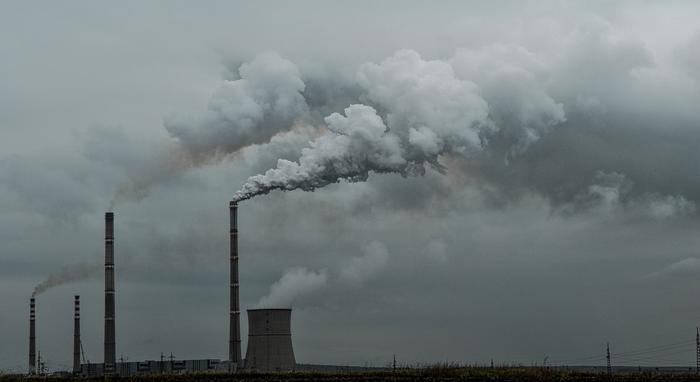
As cities explore new ways to tackle air pollution, innovative materials are opening up possibilities for cleaner urban environments.
The Delhi government and IIT Madras have collaborated to study smog-eating photocatalytic coatings for roads, an approach that aims to break down certain harmful pollutants using sunlight.
The technology typically uses titanium dioxide (TiO₂), a compound known for its chemical stability, relatively low cost and compatibility with conventional construction materials.
When exposed to light, this material acts as a photocatalyst, triggering chemical reactions that help break down specific airborne pollutants.
Photocatalytic coatings use light energy to transform certain pollutants into less harmful substances. When sunlight or suitable artificial light activates the titanium dioxide, it reacts with pollutants present on the coated surface.
These reactions can help reduce nitrogen dioxide and certain volatile organic compounds, which contribute to poor air quality. The technology may also break down some organic residues on treated surfaces.
Unlike conventional pollution-control measures that focus on preventing emissions at their source, this approach seeks to treat certain pollutants after they enter the environment.
Applying the coating to roads and other urban infrastructure could therefore create additional surfaces that contribute to pollutant removal.
Roads occupy large areas of densely populated cities. Consequently, photocatalytic coatings could offer a way to integrate pollution-control technology into existing infrastructure without requiring entirely new facilities.
Titanium dioxide is particularly promising because it is relatively durable and can be incorporated into construction materials.
If testing demonstrates consistent performance under real-world conditions, the technology could potentially be used on roads, pavements, building surfaces and other structures.
However, its effectiveness depends on several factors, including sunlight availability, weather conditions, coating durability and the concentration of pollutants. Dust accumulation and surface wear may also affect performance.
Photocatalytic coatings are a potential supplementary measure, not a complete solution to urban air pollution.
Their actual impact will depend on how much pollution they remove across large areas under everyday conditions.
Delhi must continue addressing major emission sources, including vehicles, industrial activity, construction dust and waste burning.
Nevertheless, research into smog-eating coatings could help cities explore additional ways to improve air quality.
The collaboration between the Delhi government and IIT Madras highlights the growing role of material science in environmental innovation.
Its significance will ultimately depend on whether the technology delivers measurable, lasting pollution reductions at a practical cost.
Image from Pxhere (Free for commercial use / CC0 Public Domain)
Image published on April 06, 2017
You may also like




Image Reference: https://pxhere.com/en/photo/1370585
Recent Posts
- Smog-Eating Roads: A New Approach to Tackling Air Pollution
 Photocatalytic coatings are a potential supplementary measure, not a complete solution to urban air pollution.
 - Nagastra-1R: India Boosts Precision Strike Power
 Nagastra-1R carries a one-kilogram high-explosive fragmentation warhead designed for soft-skinned targets.
 - Forest Worker Saves Elephants from Train CollisionA major railway accident was narrowly avoided in West Bengal after forest worker Akash Kerketta alerted authorities to a herd of elephants on the Bagdogra-Naxalbari railway line. His swift action helped move the elephants to safety before the approaching Sikkim Mahananda Express could collide with them.
WeRIndia – A News Aggregator

Visit werindia.com for all types of National | Business | World | Politics | Entertainment | Health related news and much more..
Leave a Reply