

A village innovation, from paddy waste to plastic-free plates
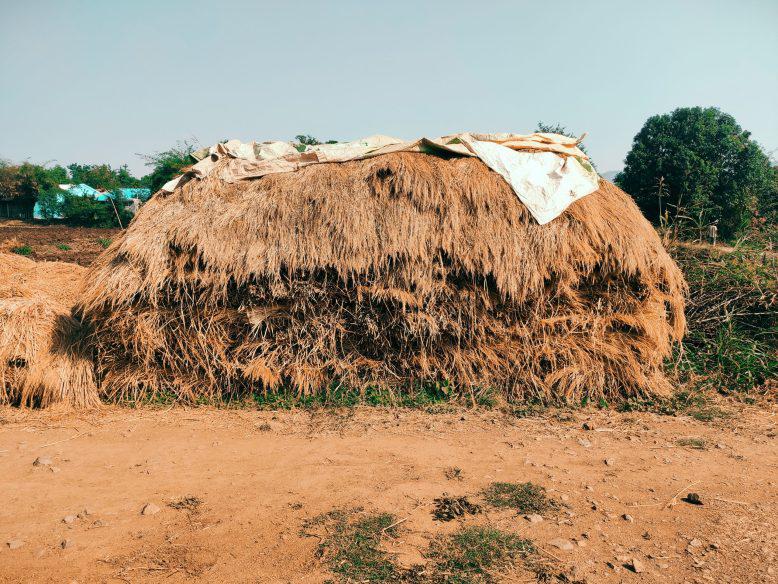
A quiet but powerful innovation is taking shape in Kakani, a small village near Narsaraopet in Andhra Pradesh, where agricultural waste is being transformed into a sustainable alternative to plastic tableware.
At a time when plastic waste from social functions continues to choke cities and villages alike, a women-led startup named Agriware is offering a practical, scalable, and eco-friendly solution.
Founded by Rayudu Rajya Lakshmi and Venkata Ramana, Agriware manufactures fully biodegradable plates, cups, bowls, glasses, and spoons using paddy by-products such as rice husk, rice bran, and paddy straw. The idea was born out of everyday observation.
The founders noticed how plastic disposables used at weddings, festivals, and public events often end up dumped in open spaces or landfills, causing long-term environmental harm.
Determined to find an alternative, they explored agricultural waste as a raw material and invested nearly ₹3 crore, including bank loans, to establish a manufacturing unit.
The unit, set up in 2024, uses advanced machines sourced from Bengaluru, each capable of producing about 1,500 items per day.
Full-scale production began six months ago after installation and testing. The technology, supported by the Council of Scientific and Industrial Research (CSIR), involves heating the raw material mixture to around 400°C and moulding it into durable tableware.
What sets Agriware’s products apart is their complete biodegradability. Made entirely from paddy waste, they decompose naturally within 90 to 120 days.
They are non-toxic and safe enough to be fed to cattle after use. If discarded into water bodies, the products dissolve gradually and can even serve as feed for fish and prawns. Unlike plastic or thermocol, they pose no threat to soil, water, or animal life.
The plates, available in sizes ranging from 10 to 12 inches, are priced at ₹7 each, while cups cost ₹3 and bowls ₹4.
Compared to traditional alternatives like plantain leaves or stems, the products are more elegant, sturdier, and less prone to fungal growth, making them suitable for large-scale use.
Agriware also strengthens the rural economy. Rice husk is sourced from nearby mills, and paddy straw is procured directly from local farmers, providing them with additional income and discouraging stubble burning.
Although the venture faces challenges such as high power consumption and the need for skilled labour, raw material availability has remained steady.
Initially focused on exports to the US and Europe, Agriware is now witnessing strong domestic demand from cities such as Hyderabad, Vijayawada, Guntur, Visakhapatnam, and Bengaluru.
As awareness grows, this village-based innovation is turning agricultural waste into value, reducing plastic pollution, and proving that sustainable solutions can emerge from rural India.
Image by Prash from Pixahive (Free for commercial use / CC0 Public Domain)
Image Published on February 11, 2021
You may also like


Image Reference: https://pixahive.com/photo/straw-and-hay-texture/
Recent Posts
- FSSAI Tightens Food Safety Rules for Perishable Items
 Indian Railways and its regional directors have also been directed to ensure vigilance.
 - Cancer drug prices set for major cut as NPPA caps trade margins
 The move could offer meaningful financial relief to cancer patients, particularly those requiring prolonged treatment.
 - Sudarsan Pattnaik creates Unique 10-Foot Maa Durga installationCelebrating the spirit of Durga Puja through creativity, renowned sand artist and Padma Shri awardee Sudarsan Pattnaik has created a stunning 10-foot installation of Maa Durga at Puri Sea Beach. Crafted in just five hours using 8 tonnes of sand, 22 varieties of vegetables and 10 types of fruits, the artwork conveys his heartfelt festive wishes and showcases the beauty of artistic innovation.
WeRIndia – A News Aggregator
Visit werindia.com for all types of National | Business | World | Politics | Entertainment | Health related news and much more..