

Supreme Court pushes for stricter oversight of online content

Digital content shapes public opinion and influences social behaviour.
Therefore, the Supreme Court has begun examining how user-generated content should be regulated in India.
On November 27, the Court signalled a tougher stance and sought a neutral, autonomous regulator for social media platforms.
It also floated the idea of Aadhaar-based age checks for adult content, while stressing that free speech must not be gagged.
A Bench of CJI Surya Kant and Justice Joymalya Bagchi said that “self-styled” industry bodies are not enough to monitor online material.
Consequently, the judges asked the Centre to submit draft rules for public consultation within four weeks.
The hearing arose from petitions filed by YouTuber Ranveer Allahbadia and others.
They challenged multiple FIRs linked to allegedly obscene remarks made during comedian Samay Raina’s YouTube show “India’s Got Latent”.
A related plea by the SMA Cure Foundation accused several comics of insulting persons with disabilities.
The controversy reached the top court after a wave of FIRs across states earlier in 2025.
The remarks by Allahbadia had triggered political criticism and forced the show offline.
Solicitor General Tushar Mehta argued that the issue involved “perversity,” not only obscenity.
He said clear gaps exist in the regulation of user-generated material. Attorney General R. Venkataramani added that fresh guidelines are ready and will be opened for stakeholder input.
Meanwhile, activist-lawyer Prashant Bhushan called for a broad public debate because the rules affect free expression.
The Bench also raised a key concern: platforms should verify age before streaming adult content.
Justice Bagchi observed that warnings are ineffective because the content has already begun.
He suggested that Aadhaar-based age verification could be explored. CJI Kant clarified that this idea is only illustrative.
He said any system should be tested through a pilot and withdrawn if it restricts speech.
However, Aadhaar-linked gates may face hurdles due to the Court’s 2018 ruling, which barred private entities from demanding Aadhaar authentication.
The judges further reviewed existing IT Rules and voluntary OTT codes. They asked why harmful content continues to recur if these systems work.
Therefore, they called for an independent body insulated from industry and the state.
In the disability-rights case, the CJI asked the Centre to consider a stringent law similar to the SC/ST Act to protect persons with disabilities from degrading speech.
The Solicitor General agreed that humour must never violate dignity.
If you want this adapted into a shorter brief, a news script, or an SEO article, I can prepare that too.
Image Credit: SayantanDhara, CC BY-SA 4.0, via Wikimedia Commons
You may also like


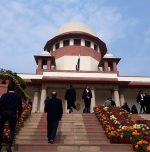

Image Reference: https://commons.wikimedia.org/wiki/File:Specimen_of_an_Aadhaar_Card_2024.png

Recent Posts
- SBI SCO Recruitment 2026 for Wealth Management posts
 Candidates must register and pay the application fee online through the SBI recruitment portal.
 - India Calls for End to Black Sea Attacks on Indian Seafarers
 Kyiv has indicated support for a combined ceasefire covering energy infrastructure and the Black Sea.
 - Dhurandhar Revolving ThaliExperience the grand Dhurandhar Revolving Thali at Angithi Tadka by Madaan, priced at ₹1,699. A lavish spread designed for a hearty, indulgent dining experience in Delhi.
WeRIndia – A News Aggregator
Visit werindia.com for all types of National | Business | World | Politics | Entertainment | Health related news and much more..