

Chinese netizens react to Modi’s visit with admiration and caution
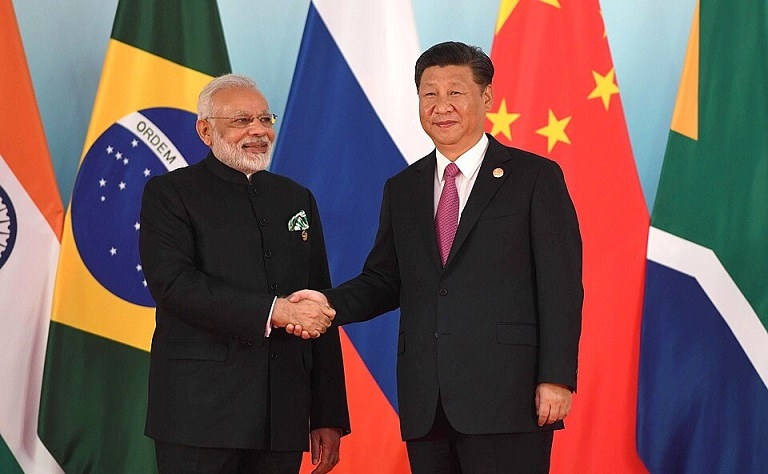
Prime Minister Narendra Modi’s two-day visit to China for the Shanghai Cooperation Organisation (SCO) summit has triggered strong reactions on Chinese social media.
Platforms like Weibo and Douyin have seen a surge in discussions, reflecting both admiration for Modi’s assertiveness and lingering scepticism about India’s geopolitical choices.
The visit, from August 31 to September 1, comes at a time when India is navigating complex relationships with both the US and China.
Despite tight online controls under China’s “Great Firewall,” some news reporter teams tracked trending opinions and sentiment shifts across major Chinese platforms.
A large section of users praised Modi’s firm stance against growing US trade pressure. His resistance to the recent 50% tariff hike on Indian exports to the US was widely viewed as a bold move.
Social media users highlighted this defiance as a sign of India’s growing strategic independence and willingness to push back against Western economic pressure.
Modi’s refusal to respond to several outreach attempts by US President Donald Trump also gained traction online.
Chinese users interpreted this as a rare diplomatic snub, signalling India’s frustration with Washington’s aggressive trade posture. Many viewed it as a turning point in India’s approach to global power dynamics.
India’s continued energy ties with Russia, especially its discounted oil imports, also drew praise.
Netizens expressed appreciation for India’s consistent and self-reliant foreign policy choices, especially in the face of Western criticism.
However, the sentiment was not entirely one-sided. Some users warned against overestimating the warming of India-China ties.
They urged caution, pointing to India’s alignment with the US in the Indo-Pacific as a possible obstacle to deeper cooperation with Beijing.
Still, the overall tone remained focused on India’s assertive global role and Modi’s rising stature in international politics.
His visit to China, after a long diplomatic freeze, is being viewed as a key moment that could reshape regional engagement, not just for India, but for the broader Asian strategic landscape.
Image Credit: Presidential Press and Information Office, CC BY 3.0, via Wikimedia Commons
Source: http://en.kremlin.ru/events/president/news/55515/photos
You may also like

Recent Posts
- Night Vision Problems? Protect Your Eyes Naturally with these tips
 A balanced diet, regular eye care and safer driving habits support healthy vision.
 - EPF Withdrawal Rules Simplified: Check Limits and Eligibility
 The simplified framework provides greater flexibility for accessing EPF savings.
 - CSIR-NCL Recruitment 2026: 24 MTS Vacancies
 CSIR-NCL will conduct a competitive written examination for provisionally eligible candidates.
WeRIndia – A News Aggregator
Visit werindia.com for all types of National | Business | World | Politics | Entertainment | Health related news and much more..