

When sunlight became water: A farmer’s revolution in Jharkhand
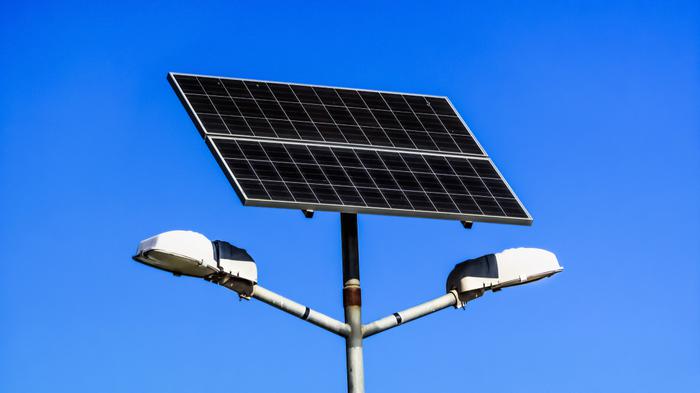
In Murudih village of Jharkhand’s Ramgarh district, farming has begun to follow a new rhythm shaped by technology and confidence rather than uncertainty.
What was once dry, monsoon-dependent land now responds to sunlight, data, and careful planning.
At the centre of this transformation is Vimla Mahata, a small farmer who reimagined her relationship with land, water, and risk.
For much of her life, Vimla’s 2.5-acre farm produced little beyond a single paddy crop each year.
With no irrigation facilities and frequent power shortages, the family relied heavily on rainfall and her husband’s daily wage earnings.
During long dry months, the soil remained unused, and financial stress followed closely. Education costs, household needs, and farming expenses were constant worries, leaving little room to think beyond survival.
The turning point came in 2016, when Vimla joined a women’s Self-Help Group. Through collective meetings, she gained access to savings systems, credit, and livelihood training.
Soon after, she connected with programmes supported by Transform Rural India, which introduced her to climate-resilient farming practices. Solar lift irrigation, drip systems, and soil health management offered practical solutions to long-standing problems.
Although unfamiliar, these ideas sparked her belief that her land could be productive year-round.
By investing ₹10,000 as her contribution, Vimla helped install a solar-powered irrigation system that utilised solar energy to pump water to her fields.
This shift removed dependence on diesel and erratic electricity. With reliable irrigation, she began using water efficiently and reduced physical labour.
Farming was no longer restricted to the monsoon, and planning became possible.
In 2022, Vimla took a decisive leap by replacing paddy with watermelon and cucumber.
The experiment proved transformative. Within four months, she earned nearly ₹3 lakh, with a net profit of about ₹2 lakh.
Encouraged by this success, she diversified into gourds and pumpkins in the following season, achieving similar returns.
Technology continued to deepen her progress. Soil sensors provided real-time information on moisture and nutrients, replacing guesswork with precision.
Today, Vimla earns over ₹3 lakh annually and serves as a local example of what informed farming can achieve.
Her journey reflects a broader shift across Jharkhand, where solar power, collective action, and agri-tech are helping farmers move from uncertainty toward sustainable growth.
Image from Pxhere (Free for commercial use / CC0 Public Domain)
Image Published on March 16, 2017
You may also like




Image Reference: https://pxhere.com/en/photo/1164023
Recent Posts
- Assam farmer’s notable journey, from ₹6 a day to an ₹80 lakh farm
 While many farmers in Upper Assam are turning to tea cultivation, Handique remains committed to farming.
 - Dussehra 2026: Date, Puja Muhurat, Rituals and Significance
 Vijay Muhurat is traditionally regarded as a favourable period for beginning important activities.
 - FSSAI Tightens Food Safety Rules for Perishable Items
 Indian Railways and its regional directors have also been directed to ensure vigilance.
WeRIndia – A News Aggregator

Visit werindia.com for all types of National | Business | World | Politics | Entertainment | Health related news and much more..