

Turning invisible power waste into intelligent energy savings
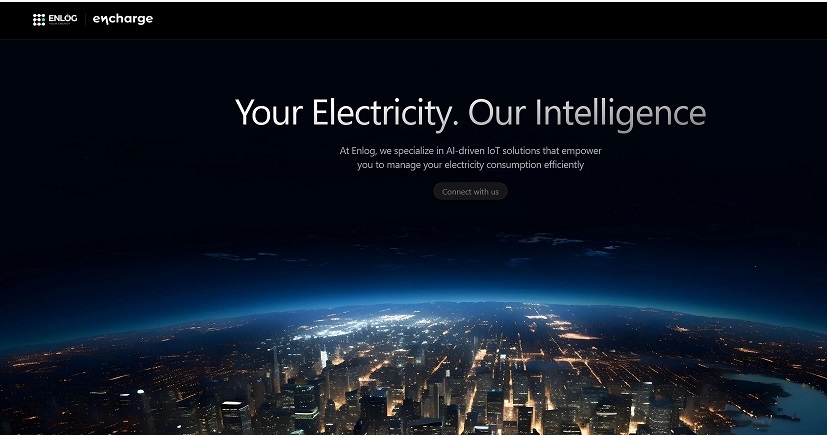
Electricity wastage is often invisible, yet it silently drains money and natural resources every day.
From homes to hotels, inefficient power use has become a structural problem.
Gurugram-based engineer Bharath Rnkawat chose to tackle this challenge through innovation, automation, and real-time intelligence.
Bharath’s idea emerged from observing unpredictable electricity bills across industries. Despite modern infrastructure, businesses lacked tools to monitor power use meaningfully.
His solution, Enlog, rethinks electricity management as a dynamic, data-driven process rather than a static utility expense.
Enlog’s patented device operates in real-time. It monitors electricity flow, detects leakages, analyses appliance behaviour, and optimises usage automatically.
Unlike traditional meters, it does not merely report consumption. Instead, it actively intervenes to ensure power is used only when required. This shift from passive monitoring to active optimisation defines the innovation.
By capturing nearly 25,000 data points every second, the system identifies inefficiencies humans usually miss.
Silent current leakages, faulty wiring, and unnecessary appliance loads are corrected instantly. As a result, electricity waste is reduced without affecting comfort or productivity.
The innovation has many benefits. The most direct benefit is cost reduction.
Users report electricity savings of up to 23 per cent. For large businesses, this translates into savings worth several lakhs every month.
Additionally, automated control removes dependence on manual checks, reducing operational effort.
Environmental impact is another major advantage. Enlog has already saved over 4,800 MWh of electricity and prevented more than 4,000 tonnes of carbon emissions.
This shows how small optimisations, when scaled, create measurable climate benefits.
The technology also offers flexibility. Its compact design allows installation across homes, hotels, offices, and industrial units.
Moreover, user-specific consumption patterns help personalise energy optimisation without disrupting daily routines.
Despite its impact, adoption remains a challenge. Many users still view electricity as a fixed cost rather than an optimisable resource.
Upfront installation costs can also deter smaller households, even though long-term savings outweigh the expense.
Integration with older electrical infrastructure may require technical adjustments.
Additionally, scaling awareness beyond commercial users to individual families will demand simpler packaging and stronger consumer education.
Enlog represents a shift in how electricity is perceived and managed. By making energy consumption visible, actionable, and automated, the innovation bridges the gap between sustainability and savings.
While challenges remain, the model proves that smarter electricity use is not only possible but necessary for a more efficient future.
Image Credit: Enlog Website Screenshot




Image Reference: https://enlog.co.in/
Recent Posts
- SBI SCO Recruitment 2026 for Wealth Management posts
 Candidates must register and pay the application fee online through the SBI recruitment portal.
 - India Calls for End to Black Sea Attacks on Indian Seafarers
 Kyiv has indicated support for a combined ceasefire covering energy infrastructure and the Black Sea.
 - Dhurandhar Revolving ThaliExperience the grand Dhurandhar Revolving Thali at Angithi Tadka by Madaan, priced at ₹1,699. A lavish spread designed for a hearty, indulgent dining experience in Delhi.
WeRIndia – A News Aggregator

Visit werindia.com for all types of National | Business | World | Politics | Entertainment | Health related news and much more..
Leave a Reply