

Surat student develops AI tool to estimate groundwater availability
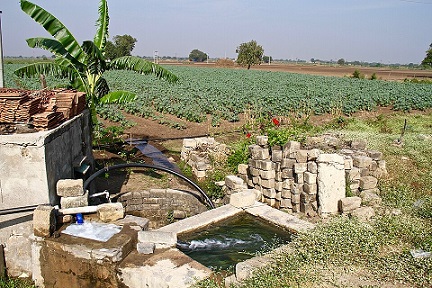
Groundwater plays a vital role in agriculture and everyday life, but knowing how much water remains beneath the surface is often difficult.
Addressing this challenge, a school student from Surat, Gujarat, has developed a machine-learning-based innovation called JALAAKAR.
Created by Dheyay Shah, the tool estimates groundwater availability across different talukas using historical borewell records and environmental data.
His innovation recently earned him the national title at vivo Ignite 2026, a competition that received more than 6,100 submissions from school students across India.
JALAAKAR uses machine learning to analyse patterns in groundwater availability.
It combines three important sources of information: historical borewell records, rainfall patterns and soil characteristics.
Together, these datasets help the system understand how groundwater conditions change over time.
Rainfall plays an important role in replenishing underground water reserves. Meanwhile, soil characteristics influence how much rainwater can seep into the ground.
Borewell records offer additional insights into changing groundwater levels and extraction patterns.
By studying these factors together, JALAAKAR identifies relationships within historical data. It then uses these patterns to estimate groundwater availability at the taluka level.
This approach aims to make underground water information easier to understand and access.
The innovation could prove useful for farmers, local communities and water-management authorities.
For instance, farmers could use groundwater estimates to better understand local water conditions while planning irrigation. Similarly, communities could gain useful insights when considering water conservation measures.
However, machine-generated estimates cannot replace actual groundwater measurements. The tool would require further field testing and independent validation to establish its accuracy across different geographical conditions.
Dheyay’s achievement highlights how young innovators can apply technology to pressing environmental challenges.
Rather than treating groundwater as an invisible resource, JALAAKAR attempts to make its availability more measurable through data.
With further development, the innovation could support better-informed decisions about groundwater extraction and conservation.
It also demonstrates how machine learning can contribute to addressing India’s growing water-management challenges.
Image Credit: TeshTesh, CC BY-SA 4.0, via Wikimedia Commons
You may also like



Image Reference: https://commons.wikimedia.org/wiki/File:Ground_water_tubewell_irrigation_crop_Gujarat_India.jpg

Recent Posts
- Surat student develops AI tool to estimate groundwater availability
 A school student from Surat, Gujarat, has developed a machine-learning-based innovation called JALAAKAR.
- Metro Rail gets GST E-Way Bill facility, eases goods movement
 The facility also supports businesses in maintaining documentation for their input tax credit (ITC) claims.
- Karthika Maha Deepam 2026 Celebrated in TiruvannamalaiTiruvannamalai witnessed grand religious celebrations on November 24, 2026, as thousands of devotees gathered for Karthika Maha Deepam. The festival featured the Bharani Deepam at 4 AM, followed by the Maha Deepam atop Arunachala Hill at 6 PM.
WeRIndia – A News Aggregator
Visit werindia.com for all types of National | Business | World | Politics | Entertainment | Health related news and much more..
Leave a Reply