

From fruit waste to food wrap: NIT Rourkela’s innovation
Plastic pollution continues to challenge ecosystems and public health across the world.
In response, researchers at the National Institute of Technology Rourkela have developed biodegradable food packaging films using discarded fruit seeds and natural polymers.
The innovation comes from the Department of Food Process Engineering under the guidance of Dr Preetam Sarkar.
The research team transformed waste materials from jackfruit, jamun, and litchi seeds into eco-friendly films that could reduce dependence on petroleum-based plastics.
Conventional plastics like LDPE, HDPE, and polystyrene remain widely used in food packaging because of their strength and flexibility.
However, these materials take hundreds of years to decompose and eventually break down into harmful microplastics. Therefore, the NIT Rourkela team explored sustainable alternatives using agricultural waste.
The researchers extracted starch from fruit seeds and combined it with tamarind kernel polysaccharides to create durable biodegradable films. Jackfruit seeds provided a strong starch base, while jamun and litchi seeds improved flexibility and structural strength.
Additionally, tamarind-based compounds enhanced the films’ barrier and mechanical properties.
To improve food safety, the team incorporated nanoparticles such as zinc oxide, chitosan, and lignin. These materials added antimicrobial and antioxidant properties to the films.
Consequently, the packaging could help protect food from harmful bacteria like Escherichia coli and Bacillus cereus.
The films also demonstrated impressive practical results. Researchers used a dipping technique to coat fruits with the biodegradable material.
Tomatoes wrapped in the film reportedly stayed fresh for up to 15 days longer. Bananas and sapotas also showed improved shelf life during trials.
The project involved researchers Dr Santhosh Ravichandran, Rahul Thakur, Bindhu Sravanthi, and Souvik Giri.
Santhosh spent nearly a year refining the films from whole seed powders before achieving the desired flexibility and strength.
Another major advantage lies in the film’s decomposition process. Unlike plastic, the material breaks down within 60 days and enriches soil with nutrients for microbes and plants.
As a result, the innovation supports a circular economy by turning agricultural waste into a sustainable packaging solution.
The development highlights how science and sustainability can work together to reduce environmental damage while improving food preservation.
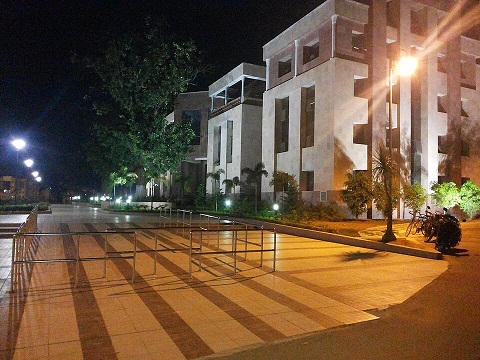
Image Credit: Utkarshsingh.1992, CC BY-SA 3.0, via Wikimedia Commons
You may also like

Image Reference: https://commons.wikimedia.org/wiki/File:Biomedical_and_Biotechnology_department_at_NIT_Rourkela.jpg

Recent Posts
- Indowud NFC: Waste to Wood
 Indowud has further demonstrated the material’s potential through real-world projects.
 - NCW Seeks Safer Rides for Women
 The NCW has also stressed the importance of safe drop-offs.
 - Major Shipbuilding Projects Launched in VizagDefence Minister Rajnath Singh inaugurated major indigenous shipbuilding and maritime infrastructure projects at Hindustan Shipyard Limited in Visakhapatnam. The launch marks a push to strengthen India’s domestic shipbuilding capabilities and expand its presence in global maritime markets.
WeRIndia – A News Aggregator

Visit werindia.com for all types of National | Business | World | Politics | Entertainment | Health related news and much more..