

NHAI to end routine KYV checks for FASTag cars from February 1
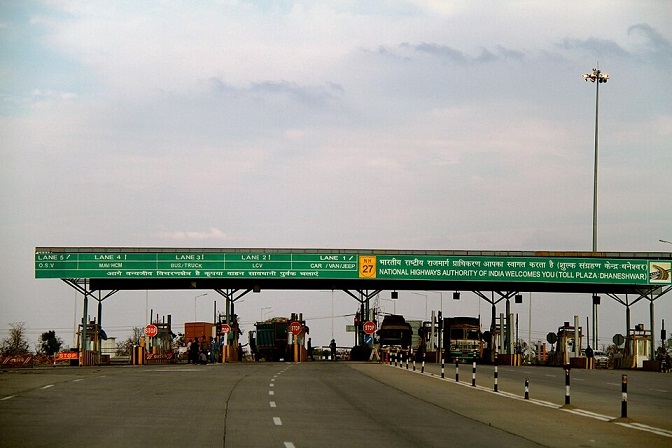
The National Highways Authority of India (NHAI) has decided to discontinue the routine requirement of Know Your Vehicle (KYV) verification for cars issued FASTags.
The announcement was made by the Ministry of Road Transport and Highways on Thursday. The revised rules will come into effect from February 1.
KYV is a verification mechanism used to ensure that FASTags are correctly mapped to vehicle registration numbers.
It was introduced to prevent misuse and revenue leakage at toll plazas.
However, the ministry said the existing system often caused inconvenience and post-activation harassment for highway users.
Under the new framework, KYV will no longer be a standard requirement for vehicles that already have FASTags. Verification will now be conducted only if a specific issue or complaint arises.
These include cases of loose or duplicate FASTags, or mismatches between the vehicle number and the FASTag. In such situations, the problem will be flagged at the toll plaza, triggering corrective action.
NHAI has also ended the practice of banks issuing FASTags first and conducting KYV checks later.
As per the revised rules, all verification related to vehicle ownership and identity must be completed before FASTag activation.
Once activated, banks will not be allowed to seek additional documents or initiate KYV checks.
Currently, around 40 banks are authorised to issue FASTags. To ensure system integrity, NHAI has strengthened pre-activation validation norms for these issuer banks.
FASTag activation will now be permitted only after vehicle details are validated against the VAHAN database.
In exceptional cases where vehicle details are not available on VAHAN, banks must verify the information using the vehicle’s Registration Certificate (RC) before activation.
FASTags sold through online channels will also be activated only after full validation.
The relaxation, however, applies only to passenger cars. Commercial vehicles such as trucks and multi-axle vehicles are excluded due to higher risk factors and will continue to follow existing verification norms.
According to the ministry, these changes aim to improve user convenience while maintaining compliance and accuracy in the FASTag ecosystem.
Image Credit: TeshTesh, CC BY-SA 4.0, via Wikimedia Commons
You may also like



Image Reference: https://commons.wikimedia.org/wiki/File:Toll_Plaza_on_Roads_in_India_NH_27_National_Highway_Rajasthan_NH76_(old_system)_in_India.jpg
_in_India.jpg)
Recent Posts
- Night Vision Problems? Protect Your Eyes Naturally with these tips
 A balanced diet, regular eye care and safer driving habits support healthy vision.
 - EPF Withdrawal Rules Simplified: Check Limits and Eligibility
 The simplified framework provides greater flexibility for accessing EPF savings.
 - CSIR-NCL Recruitment 2026: 24 MTS Vacancies
 CSIR-NCL will conduct a competitive written examination for provisionally eligible candidates.
WeRIndia – A News Aggregator

Visit werindia.com for all types of National | Business | World | Politics | Entertainment | Health related news and much more..