

India’s Submarine Push Nears a Key Decision
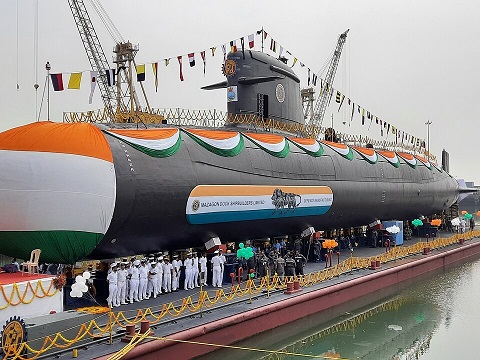
India’s underwater warfare plans could soon enter a decisive phase as a major submarine programme moves toward approval.
Project 75(I) may reach the Cabinet Committee on Security (CCS) in the coming days.
The programme covers six advanced conventional submarines for the Indian Navy. The estimated cost stands at around ₹70,000 crore.
Mazagon Dock Shipbuilders Ltd (MDL) will build the submarines in Mumbai with Germany’s ThyssenKrupp Marine Systems (TKMS).
The project has faced years of delays. Commercial negotiations and technical requirements repeatedly slowed progress. However, a CCS approval could unlock the contract and allow construction to begin.
Meanwhile, TKMS is strengthening its industrial network in India. The company has signed an agreement with Hyderabad-based VEM Technologies for heavyweight torpedoes.
Its subsidiary ATLAS ELEKTRONIK will support the programme. VEM will handle integration under a technology-transfer arrangement.
TKMS has also joined hands with Mumbai-based CFF Fluid Control for anti-submarine warfare systems. Furthermore, the company is exploring partnerships with DRDO and other Indian organisations.
Technology transfer remains central to Project 75(I). India wants more than imported submarines assembled locally. It seeks expertise in construction, maintenance, upgrades and future submarine design.
The vessels are expected to feature air-independent propulsion (AIP). This technology can significantly extend submerged endurance. They could also carry advanced sensors, torpedoes, missiles and electronic warfare systems.
India urgently needs stronger conventional submarine capabilities. The Navy faces a fleet shortage while Chinese submarine activity in the Indian Ocean continues to draw attention.
MDL previously constructed six Kalvari-class submarines with French assistance. INS Vagsheer, the final boat, entered service in January 2025.
India also operates German-designed Shishumar-class submarines, including vessels built at MDL during the 1980s.
Therefore, the TKMS-MDL partnership could revive an established industrial relationship. This time, however, India seeks deeper localisation and technology absorption.
If the CCS gives its approval, negotiations will move toward contract signing. The parties must then settle workshare, construction schedules and long-term maintenance arrangements.
Image Credit: Oullu Gullu, CC BY-SA 4.0, via Wikimedia Commons
You may also like


Image Reference: https://commons.wikimedia.org/wiki/File:INS_Vagsheer.jpg

Recent Posts
- Night Vision Problems? Protect Your Eyes Naturally with these tips
 A balanced diet, regular eye care and safer driving habits support healthy vision.
 - EPF Withdrawal Rules Simplified: Check Limits and Eligibility
 The simplified framework provides greater flexibility for accessing EPF savings.
 - CSIR-NCL Recruitment 2026: 24 MTS Vacancies
 CSIR-NCL will conduct a competitive written examination for provisionally eligible candidates.
WeRIndia – A News Aggregator

Visit werindia.com for all types of National | Business | World | Politics | Entertainment | Health related news and much more..