

Indian Army to deploy indigenous Ananta Shastra
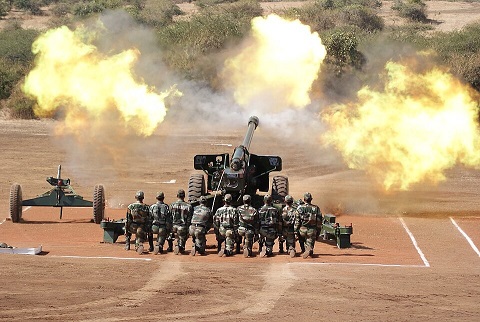
In a significant move to bolster its air defence capabilities, the Indian Army has issued a tender to procure 5–6 regiments of the indigenously developed ‘Ananta Shastra’ surface-to-air missile system.
Designed by the Defence Research and Development Organisation (DRDO), the system was formerly known as the Quick Reaction Surface-to-Air Missile (QRSAM).
The project is estimated to cost around ₹30,000 crore and is seen as a critical component of India’s push towards self-reliance in defence under the Make in India initiative.
The decision follows the system’s successful performance during Operation Sindoor in May 2025, a four-day conflict during which Pakistani forces deployed Chinese drones and weapons.
The Indian Army’s air defence units, using a mix of legacy systems like the L-70 and Zu-23 guns, along with advanced systems such as the Akash, MR-SAM, and the Indian Air Force’s Spyder and Sudarshan S-400, managed to neutralise most aerial threats.
Officials confirmed that Ananta Shastra played a pivotal role in intercepting Pakistani drones during the operation, accelerating the decision to procure the system.
Key Features of Ananta Shastra
- Range: Approximately 30 km
- Mobility: Highly mobile and capable of rapid deployment
- Targeting: Can detect, track, and engage targets from small drones to large aircraft
- All-weather capability: Tested in both day and night conditions
- Precision: Can operate effectively even with visual and structural obstacles
The Ananta Shastra is designed to complement existing systems like Akash and MR-SAM, forming a layered air defence shield for India’s sensitive border areas.
The system will be deployed along the western (Pakistan) and northern (China) borders, enhancing India’s defence posture in both regions.
This forms part of a broader modernisation plan for the Army’s Air Defence Wing, which operates in close coordination with the Indian Air Force.
Under the leadership of Army Chief General Upendra Dwivedi, the Indian Army is actively promoting indigenous weapons and systems.
In addition to Ananta Shastra, the army is inducting new radars, very short-range air defence (VSHORAD) systems, jammers, and laser-based counter-drone systems to tackle emerging threats, including Turkish and Chinese drones used by Pakistan.
Future additions will include Zoravar light tanks and advanced indigenous air defence platforms, further reducing reliance on foreign defence equipment.
Highlights
- Indian Army issues tender for Ananta Shastra missile system, formerly known as QRSAM.
- Developed by DRDO, the system has a ₹30,000 crore procurement value.
- Successfully deployed during Operation Sindoor against Pakistani drone threats.
- It will be deployed along the China and Pakistan borders.
- Part of a larger move towards indigenisation and self-reliant defence infrastructure.
Image Credit: Krishna Chaitanya Velag, CC BY-SA 4.0, via Wikimedia Commons
You may also like


Image Reference: https://commons.wikimedia.org/wiki/File:Fire_power_demo_by_Artillery_of_Indian_Army.jpg

Recent Posts
- Navratri Fasting 2026: Eat Right, Stay Energised
 Fasting requires caution for people with diabetes, heart conditions or other medical problems.
 - GST Council Pushes Faster Compliance and Refunds
 The GST Council is examining measures to make GST compliance easier for small taxpayers.
 - SBI SCO Recruitment 2026 for Wealth Management posts
 Candidates must register and pay the application fee online through the SBI recruitment portal.
WeRIndia – A News Aggregator

Visit werindia.com for all types of National | Business | World | Politics | Entertainment | Health related news and much more..