

India’s Car Safety Rules Get a Major Overhaul
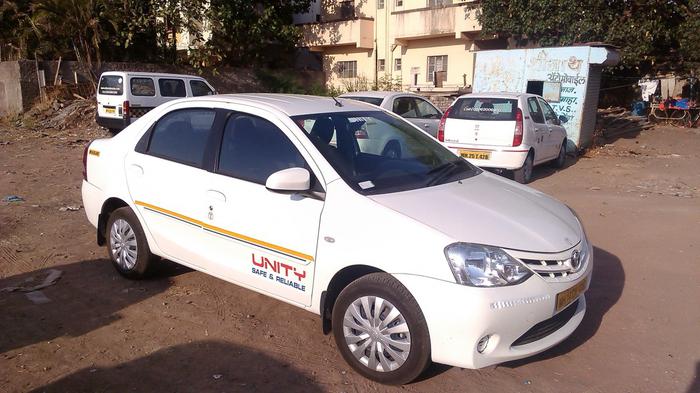
Road safety is becoming a key priority as India prepares to introduce stricter requirements for vehicles sold in the country.
The proposed changes cover crash investigations, pedestrian protection, passenger safety and anti-theft technology.
Their implementation will take place in phases, with deadlines ranging from October 2027 to 2032.
A major highlight is the introduction of an Event Data Recorder (EDR), often called a car’s black box. The device captures technical information surrounding a serious collision.
Depending on the system, this may include vehicle speed, brake application, seat belt usage and airbag deployment. Unlike an aircraft black box, however, it does not record conversations inside the car.
Consequently, EDR data could help investigators reconstruct accidents more accurately. It may establish what happened in the moments before impact and provide evidence beyond eyewitness accounts.
Nevertheless, the device cannot independently determine fault. Investigators must also consider road conditions, weather and other vehicles involved.
Meanwhile, the revised requirements focus on reducing injuries among pedestrians and vehicle occupants. Manufacturers will need to address protection during frontal and side-impact collisions.
Additionally, anti-theft provisions covering alarms and immobilisers aim to make vehicles harder to steal. Immobilisers prevent engines from starting without an authorised key or activation method.
The new framework will take effect gradually. Certain provisions carry October 2027 deadlines, while others extend through 2028 and 2029.
Further requirements are scheduled for 2031 and 2032, allowing manufacturers time to adapt their vehicles and systems.
India is also preparing to strengthen its vehicle safety assessment programme. Bharat New Car Assessment Programme (Bharat NCAP) is expected to enter its second phase in October 2027.
Under the proposed framework, pedestrian protection and vulnerable road user safety would account for 20 of the total 100 points.
EDRs already operate in several major automotive markets. China introduced mandatory requirements for passenger cars in 2022, while comparable European requirements also took effect that year.
In the United States, an estimated 96% of model-year 2013 passenger cars already had these devices.
However, data access remains an important concern. Clear rules will be needed to establish who can retrieve EDR information, under what circumstances and with whose authorisation.
Thus, the proposed measures signal a broader shift towards safer vehicles and more reliable accident investigations.
Their eventual impact will depend on effective implementation, transparent data-access rules and manufacturers’ compliance.
Image from Pxhere (Free for commercial use / CC0 Public Domain)
Image published on March 12, 2017
You may also like




Image Reference: https://pxhere.com/en/photo/1102854
Recent Posts
- DGFT Hyderabad Recruitment 2026: Salary ₹60,000 Per Month
 The recruitment is for two Young Professional vacancies in Hyderabad, with a monthly remuneration of ₹60,000.
- India’s Car Safety Rules Get a Major Overhaul
 EDRs already operate in several major automotive markets.
- HealthFab: Sustainable Period Care
 HealthFab was founded by Kiriti Acharjee, Saurav Chakraborty and Satyajit Chakraborty, all from Assam.
WeRIndia – A News Aggregator

Visit werindia.com for all types of National | Business | World | Politics | Entertainment | Health related news and much more..
Leave a Reply