

India launches its first hydrogen-powered train on Haryana route
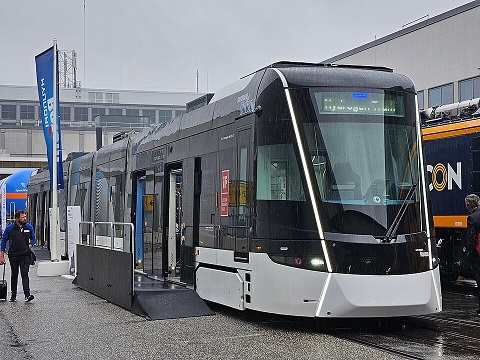
Clean energy is steadily transforming India’s transport sector with innovative technologies. In a major milestone, Prime Minister Narendra Modi flagged off the country’s first hydrogen-powered train today.
The train began operations on the Jind–Sonipat section in Haryana, marking a significant step towards greener railway transportation.
Unlike conventional electric trains, this hydrogen fuel cell train produces electricity on board. It generates power through a chemical reaction between hydrogen and oxygen.
Consequently, the only by-product is water vapour, making the system environmentally friendly. Moreover, the train does not rely on overhead electric lines or traditional fuels such as coal and diesel.
The train consists of 10 coaches, including two hydrogen-powered cars positioned at both ends and eight trailer coaches.
Each power car delivers 1,200 kW of power, providing enough energy to operate the entire train efficiently.
Furthermore, the train can accommodate nearly 2,600 passengers. Although its design speed is 110 kmph, it will initially operate at 75 kmph on the 89-kilometre Jind–Sonipat route.
This project represents an important advancement in India’s clean mobility efforts. It supports the country’s Net Zero targets and the National Green Hydrogen Mission by reducing dependence on diesel-powered trains.
Additionally, the train stands out globally because most hydrogen-powered trains currently operating abroad have only two or three coaches.
In contrast, India’s larger train demonstrates that hydrogen technology can support high-capacity passenger services.
The project also highlights indigenous engineering capabilities. The train was designed by the Research Designs and Standards Organisation, integrated by Medha Servo Drives, and styled by the Integral Coach Factory.
Therefore, it reflects the government’s focus on promoting advanced railway technology developed within the country.
Initially, the hydrogen-powered train will connect Jind Junction, Gohana Junction, and Sonipat, while serving several intermediate stations and halts along the route.
The selected route will help Indian Railways evaluate the train’s operational performance, safety, and reliability under regular passenger service conditions before considering wider deployment.
Image Credit: GeorgR (de), CC BY-SA 4.0, via Wikimedia Commons
You may also like

Image Reference: https://commons.wikimedia.org/wiki/File:Daejeon-metro-tram-train--built-by-hyundai-rotem--on-innotrans-fair--2024-09-24--picture-by-georgr--cc-by-sa.jpg

Recent Posts
- Everyday Habits That May Harm Your Brain Health
 Adequate sleep allows the brain to recover, process information and support memory.
 - Top 10 investment schemes in India that benefit from compounding
 A compound interest calculator can help estimate how investments may grow over time.
 - DGFT Hyderabad Recruitment 2026: Salary ₹60,000 Per Month
 The recruitment is for two Young Professional vacancies in Hyderabad, with a monthly remuneration of ₹60,000.
WeRIndia – A News Aggregator

Visit werindia.com for all types of National | Business | World | Politics | Entertainment | Health related news and much more..