

UPI fee proposal targets big businesses, not everyday users
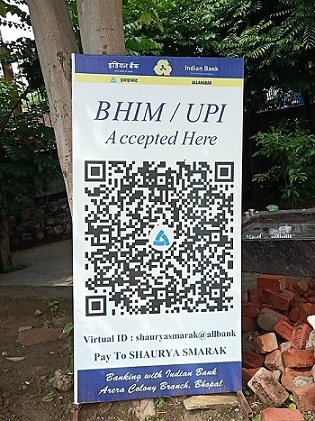
India’s digital payments ecosystem continues to evolve as transaction volumes reach new highs.
Now, the Centre is considering a policy shift that could reshape how large-value UPI business payments are processed.
The Modi government is reportedly planning to allow the levy of a Merchant Discount Rate (MDR) on select UPI transactions.
However, the proposed charge will apply only to business payments exceeding ₹2,000. Meanwhile, person-to-person (P2P) transfers will continue without any MDR.
The proposal forms part of the Taxation and Other Laws (Amendment) Bill introduced in Parliament.
Finance Minister Nirmala Sitharaman has suggested removing the existing restriction that prevents banks and payment service providers from charging MDR on electronic payment modes.
If approved, the MDR could range between 0.25% and 0.4% for eligible business transactions.
Even so, government officials clarified that no final decision has been taken regarding its implementation timeline.
According to official estimates, only about five per cent of all UPI transactions exceed the ₹2,000 threshold.
However, these payments contribute nearly 65% of the platform’s overall transaction value. Therefore, the proposal mainly targets high-value commercial payments instead of routine consumer spending.
As a result, daily purchases such as milk, vegetables, groceries, auto fares, and taxi rides are expected to remain unaffected.
Furthermore, officials said nearly 95% of all UPI transactions would continue without any MDR, even if the proposal becomes law.
In July alone, India recorded 23.7 billion UPI transactions worth ₹29.9 lakh crore. These figures highlight the platform’s growing role in the country’s digital economy.
Consequently, policymakers are exploring measures to ensure the payment infrastructure remains financially sustainable.
Officials also indicated that businesses may not necessarily transfer the additional cost to customers.
Since the proposed fee is relatively small, many merchants could choose to absorb it instead.
The proposal signals a shift in the government’s approach toward supporting the long-term sustainability of digital payments.
While ordinary users are likely to remain unaffected, large merchants may no longer enjoy completely free UPI transactions.
The final decision could significantly influence the next phase of India’s digital payments landscape.
Image Credit: Suyash.dwivedi, CC BY-SA 4.0, via Wikimedia Commons
You may also like



Image Reference: https://commons.wikimedia.org/wiki/File:Bhim_upi_ID_to_accept_entrance_fee_at_Shaurya_Smarak_Bhopal.jpg

Recent Posts
- IndiGo to shift 12 international routes to Navi Mumbai by July 2027
 IndiGo plans to support its expanding network with its Airbus A320, A321 and A321XLR fleet.
 - Cyclone Arnab: Odisha Deploys 225 Rescue Teams
 The IMD expects the storm to cross the coast between Bapatla and Visakhapatnam.
 - China develops High-Tech robot designed for Security and CombatA Chinese tech company has introduced a robotic bodyguard built to handle dangerous situations using advanced physical capabilities. The machine reportedly can defend against knife attacks and bring moving vehicles to a halt, showcasing a striking new direction in security technology.
WeRIndia – A News Aggregator
Visit werindia.com for all types of National | Business | World | Politics | Entertainment | Health related news and much more..