

How dried flowers are reviving rural enterprise in Manipur

Innovation in rural India often begins with necessity. During the 2020 pandemic lockdown, transportation halted across the country.
Consequently, farmers in Mao, a hill town in Manipur’s Senapati district, watched their flower crops rot in the fields. What appeared to be a crisis soon inspired a sustainable enterprise.
Chokhone Krichena, a biotechnology graduate who had recently returned from Bengaluru, decided to experiment with preserving the unsold blooms. She used traditional air-drying techniques once practised by her grandmothers.
Within a year, those small home experiments evolved into Dianthe Pvt Ltd, a venture that now sells dried floral products across 18 Indian states.
Her story gained national recognition when Prime Minister Narendra Modi mentioned her initiative in the radio programme Mann Ki Baat.
He highlighted how the enterprise, founded in 2021, connects rural women farmers to urban markets while strengthening local livelihoods.
Mao, often described as the “land of flowers,” lies in a mountainous region where large-scale farming remains difficult. Krichena grew up surrounded by these landscapes and spent much of her childhood among wildflowers.
However, when she returned home during the pandemic, she saw farmers struggling with unsold produce.
Therefore, she began drying flowers to create long-lasting decorative products such as bouquets, candles, wedding accessories, and gift items.
Initially, many people questioned her decision. Family members suggested she pursue a stable job in the city. Nevertheless, Krichena took a different path.
She distributed 50 flower saplings to farmers and offered a buyback guarantee. Moreover, she promised prices three to four times higher than what vegetable crops usually earned. Gradually, the model proved successful, and more growers joined the initiative.
Today, between 50 and 200 farmers receive training each month in harvesting techniques, careful handling, and quality standards required by urban markets.
Many participants are women who previously depended on low-income farming. As a result, the enterprise has created opportunities for financial independence within the community.
Dianthe now records an annual turnover of about ₹12 lakh and supports nearly 200 cultivators. The business focuses on flowers that preserve well after drying, including statice, celosia, bunny tails, and edelweiss daisies.
These varieties maintain colour for months, making them suitable for shipping and long-term use.
Despite its success, the venture faces challenges. Water scarcity, limited infrastructure, and fragile logistics complicate mountain commerce. Yet dried flowers offer a practical solution to the perishability of fresh blooms.
Krichena’s approach demonstrates how traditional knowledge and local biodiversity can shape modern entrepreneurship.
By transforming wasted flowers into durable products, her initiative reduces plastic use, prevents agricultural loss, and builds resilient rural livelihoods.
Image Credit: Dianthe Website Screenshot
You may also like

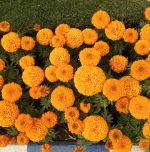

Image Reference: https://www.dianthe.in/
Recent Posts
- Assam farmer’s notable journey, from ₹6 a day to an ₹80 lakh farm
 While many farmers in Upper Assam are turning to tea cultivation, Handique remains committed to farming.
 - Dussehra 2026: Date, Puja Muhurat, Rituals and Significance
 Vijay Muhurat is traditionally regarded as a favourable period for beginning important activities.
 - FSSAI Tightens Food Safety Rules for Perishable Items
 Indian Railways and its regional directors have also been directed to ensure vigilance.
WeRIndia – A News Aggregator

Visit werindia.com for all types of National | Business | World | Politics | Entertainment | Health related news and much more..