

Jharkhand’s sacred hill said to foretell an unborn child’s gender
Across the world, superstitions shape beliefs and behaviour in different ways. In extreme cases, people even risk their lives in the name of faith.
However, in one village of Jharkhand, locals describe their belief not as superstition, but as a centuries-old tradition rooted in history.
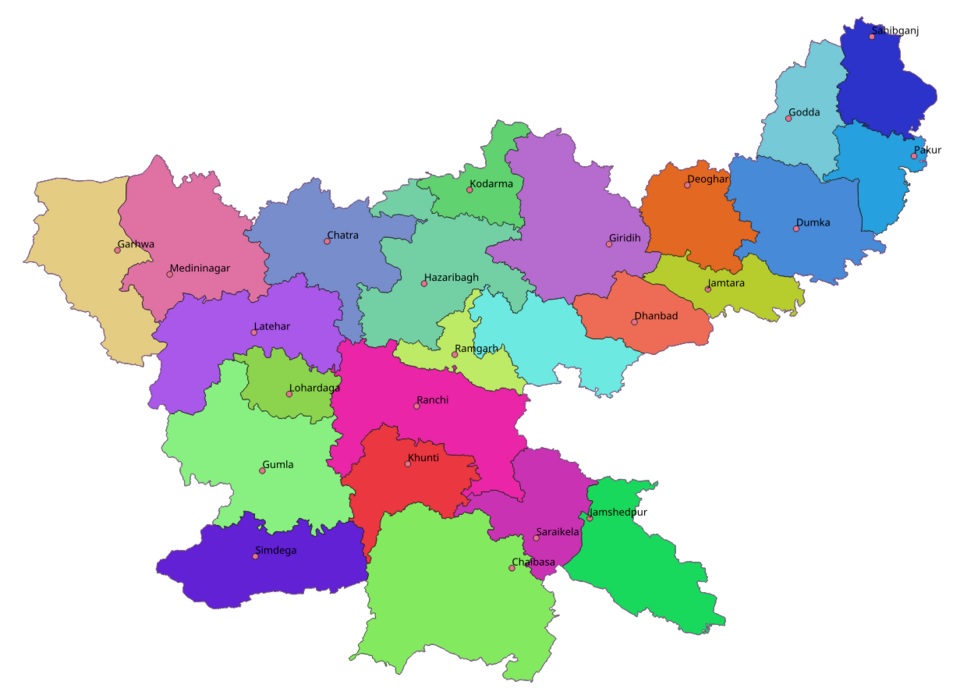
This unique practice exists in Khukhara village of Lohardaga district. Here, villagers believe that a nearby hill can reveal whether an unborn child will be a boy or a girl.
According to local accounts, the tradition has been followed for nearly 400 years and continues to command deep trust among residents.
Normally, determining the sex of a fetus is both medically restricted and legally prohibited in India. Yet, villagers say their belief does not involve medical testing.
Instead, they rely on a natural sign found on the hill, a crescent-shaped mark believed to hold symbolic meaning.
Local elders trace the origin of this custom to the reign of King Chintamani Sharan Nath Shahdev, the last ruler of the Naga dynasty.
Since then, the ritual has been passed down through generations and remains part of the village’s cultural identity.
As part of the practice, a pregnant woman throws a stone toward the crescent-shaped formation from a fixed distance. If the stone lands within the crescent, villagers interpret it as a sign of a boy.
If it falls outside the shape, it is believed to indicate a girl. The ritual is performed publicly and with collective participation.
Villagers claim that the outcomes often align with the eventual birth, which has further strengthened their belief over time.
Interestingly, residents insist that knowing the predicted gender does not lead to discrimination or unequal treatment within the community.
While this tradition continues with strong local faith, it is important to clarify that such beliefs are not scientifically proven.
This article neither supports nor validates the practice, but presents it as a cultural phenomenon that reflects how ancient traditions still influence modern communities.
Image Credit: Heinz OSM, CC BY-SA 4.0, via Wikimedia Commons
You may also like


Image Reference: https://commons.wikimedia.org/wiki/File:Jharkhand.png

Recent Posts
- Everyday Habits That May Harm Your Brain Health
 Adequate sleep allows the brain to recover, process information and support memory.
 - Top 10 investment schemes in India that benefit from compounding
 A compound interest calculator can help estimate how investments may grow over time.
 - DGFT Hyderabad Recruitment 2026: Salary ₹60,000 Per Month
 The recruitment is for two Young Professional vacancies in Hyderabad, with a monthly remuneration of ₹60,000.
WeRIndia – A News Aggregator

Visit werindia.com for all types of National | Business | World | Politics | Entertainment | Health related news and much more..