

Taj Mahal dispute reaches High Court for fresh review

A historic legal debate over one of India’s most recognised monuments has entered a new phase after judicial intervention.
The Allahabad High Court has agreed to examine a petition linked to claims about the Taj Mahal’s origins and internal structures.
The court has taken up the matter concerning the claim that a ‘Tejo Mahalaya’ temple exists within the Agra monument.
Justice Rohit Ranjan Agarwal observed that the issue requires consideration under Article 227 of the Constitution. Therefore, the petition has moved beyond earlier proceedings in lower courts.
The petitioners have argued that a scientific and physical survey is necessary to understand the historical aspects of the site.
According to their submission, such an examination could reveal possible religious symbols and architectural remains. Senior advocate Hari Shankar Jain presented these arguments before the court.
Meanwhile, the government and the Archaeological Survey of India opposed the claims through their legal representatives.
Additional Solicitor General and advocate Manoj Kumar Singh appeared for the respondents during the hearing.
The dispute began in the Agra courts in 2015. Earlier, the petitioners had sought the appointment of an Advocate Commissioner under Order 26 Rule 9 of the Civil Procedure Code.
The purpose was to conduct a local inspection of the monument’s premises.
However, the Civil Judge (Senior Division), Agra, rejected the request on July 18, 2019. Subsequently, the petitioners approached the District Court through a revision petition.
On April 4, 2026, the Additional District Judge dismissed that challenge, stating that it was not legally maintainable.
Afterwards, the petitioners approached the High Court under Article 227. They argued that the earlier decisions prevented them from gathering physical evidence needed for their claims.
Now, the High Court has issued notices to the government and other respondents. Additionally, it has directed that the notice process should be completed within 10 days.
The respondents have also been instructed to submit their counter-affidavits before the next hearing.
As a result, the matter will receive further examination at the constitutional level. The court’s action marks a significant development in the long-running dispute surrounding the heritage monument.
Image Credit: Joel Godwin, CC BY-SA 4.0, via Wikimedia Commons
You may also like
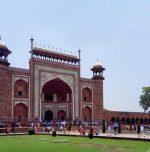



Image Reference: https://commons.wikimedia.org/wiki/File:Taj-Mahal.jpg

Recent Posts
- Assam farmer’s notable journey, from ₹6 a day to an ₹80 lakh farm
 While many farmers in Upper Assam are turning to tea cultivation, Handique remains committed to farming.
 - Dussehra 2026: Date, Puja Muhurat, Rituals and Significance
 Vijay Muhurat is traditionally regarded as a favourable period for beginning important activities.
 - FSSAI Tightens Food Safety Rules for Perishable Items
 Indian Railways and its regional directors have also been directed to ensure vigilance.
WeRIndia – A News Aggregator

Visit werindia.com for all types of National | Business | World | Politics | Entertainment | Health related news and much more..