

Nagastra-1R: India Boosts Precision Strike Power
Modern warfare increasingly relies on precision, speed and technology to gain an advantage on the battlefield.
Against this backdrop, the Indian Army has strengthened its capabilities with the delivery of 450 Nagastra-1R loitering munitions in a single consignment.
The initial batch arrived at the Pulgaon Ammunition Depot after successfully completing Pre-Delivery Inspections (PDI).
Procured under an emergency purchase agreement, the delivery marks a significant step in India’s efforts to improve battlefield readiness. It also represents the largest single-time supply of such weapons from one manufacturer.
Developed by Economics Explosives Ltd (EEL) in collaboration with Bengaluru-based Z-Motion Autonomous Systems Pvt Ltd, Nagastra-1R features more than 75% indigenous content.
Consequently, the system supports India’s push towards greater defence self-reliance.
At the heart of the system lies a compact, electric-powered fixed-wing drone weighing just 9 kilograms. It offers an endurance of 30 minutes and operates within a range of 15 kilometres under man-in-the-loop control.
In autonomous mode, its range extends to 30 kilometres. Furthermore, GPS-guided navigation enables precision strikes with a reported accuracy of approximately two metres.
The drone also offers operational advantages through its low-noise electric propulsion system. Its acoustic signature reportedly makes detection difficult at altitudes above 200 metres.
Additionally, day-and-night surveillance cameras help operators identify targets under varying visibility conditions.
For strike missions, Nagastra-1R carries a one-kilogram high-explosive fragmentation warhead designed for soft-skinned targets.
However, its capabilities extend beyond attack missions. A parachute recovery mechanism allows the drone to return safely when operators abort a mission, enabling reuse where feasible.
Despite its advanced functions, the system remains portable. The complete 30-kilogram setup fits into two rucksacks containing the ground control station, communication equipment, payload and pneumatic launcher.
The delivery could strengthen India’s tactical options along sensitive border sectors. In particular, the system offers a way to engage selected targets while reducing the immediate exposure of personnel.
Its combination of surveillance, precision guidance and portability makes it a valuable addition to India’s evolving unmanned warfare capabilities.
For Pakistan, the deployment could complicate border security planning. Nevertheless, its battlefield impact will depend on operational integration, electronic warfare conditions and the effectiveness of opposing air defences.
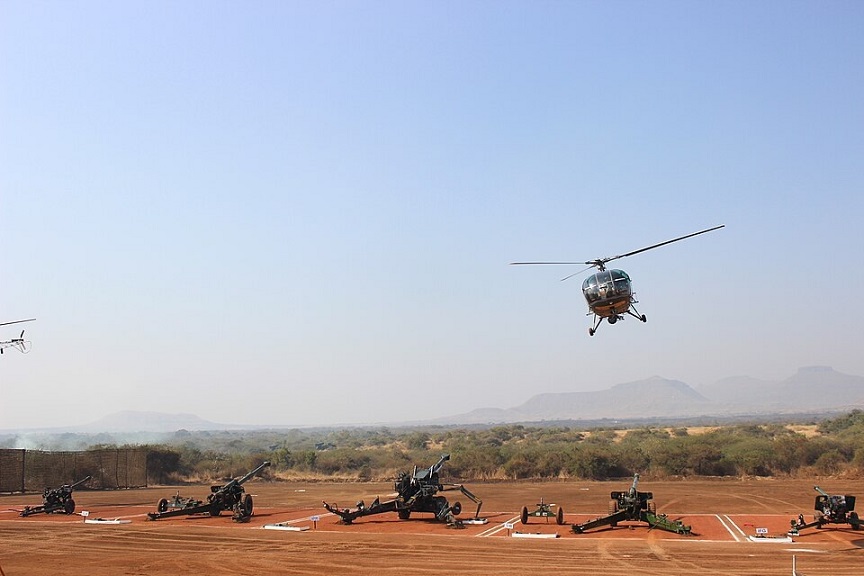
Image Credit: Krishna Chaitanya Velaga, CC BY-SA 4.0, via Wikimedia Commons
You may also like




Image Reference: https://commons.wikimedia.org/wiki/File:Indian_Army_Aviation_Corps_and_Air_Defence_Arty_Joint_Display_Ex_6.jpg

Recent Posts
- Smog-Eating Roads: A New Approach to Tackling Air Pollution
 Photocatalytic coatings are a potential supplementary measure, not a complete solution to urban air pollution.
 - Nagastra-1R: India Boosts Precision Strike Power
 Nagastra-1R carries a one-kilogram high-explosive fragmentation warhead designed for soft-skinned targets.
 - Forest Worker Saves Elephants from Train CollisionA major railway accident was narrowly avoided in West Bengal after forest worker Akash Kerketta alerted authorities to a herd of elephants on the Bagdogra-Naxalbari railway line. His swift action helped move the elephants to safety before the approaching Sikkim Mahananda Express could collide with them.
WeRIndia – A News Aggregator

Visit werindia.com for all types of National | Business | World | Politics | Entertainment | Health related news and much more..
Leave a Reply