

India’s New Highways May Soon Allow Tolling Without Stopping
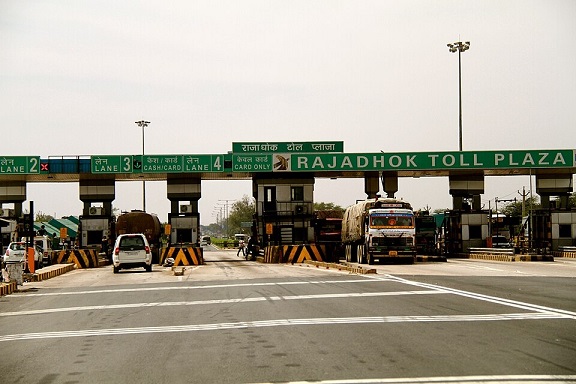
India is changing how its next generation of high-speed highways will be planned and operated.
New guidelines issued by the National Highways Authority of India (NHAI) focus on smoother tolling, smarter construction and better environmental planning.
A key change is the planned use of Multi-Lane Free Flow (MLFF) tolling. The system will allow vehicles to pass through toll points without stopping at conventional booths.
Tolls will instead be collected electronically as vehicles continue moving.
The guidelines cover upcoming four- and six-lane Greenfield and Brownfield high-speed access-controlled National Highways. However, the framework does not cover expressways.
Future highway designs will rely on broader traffic assessments. These projections will consider existing traffic and vehicles likely to shift from other routes.
Expected growth in freight movement will also be considered. Economic and commercial activity will form part of these estimates. Toll records and other reliable data will further support traffic forecasts.
This approach aims to help planners determine future capacity before finalising highway designs.
The guidelines also promote Automated and Intelligent Machine-aided Construction (AI-MC). The technology will be used for highway embankments and pavement construction.
It is expected to improve accuracy and consistency during construction. It can also support closer monitoring of project work.
Landscaping will now receive attention during the planning stage itself. Green areas may be developed around loop areas, flyovers and highway medians.
Plantation plans will consider local climate, terrain and environmental conditions.
Drip irrigation systems will also be provided along National Highway medians. The move aims to reduce water consumption and simplify maintenance.
The new framework also calls for detailed drainage planning. Project reports will have to identify where rainwater from highways and nearby areas will be discharged.
Water-harvesting structures may be developed where natural drainage outlets are unavailable.
Additional drainage arrangements will also cover underpasses, flyovers and depressed medians.
The measures aim to reduce waterlogging and protect highway infrastructure from rain-related damage.
Thus, the guidelines seek to create safer, more efficient and environmentally conscious high-speed National Highway corridors.
They also aim to prepare new routes for changing traffic needs and future infrastructure demands.
Image Credit: TeshTesh, CC BY-SA 4.0, via Wikimedia Commons
You may also like

Image Reference: https://commons.wikimedia.org/wiki/File:Toll_Plaza_on_Rajasthan_Roads_India_March_2015_b.jpg

Recent Posts
- CSIR-NCL Recruitment 2026: 24 MTS Vacancies
 CSIR-NCL will conduct a competitive written examination for provisionally eligible candidates.
 - Voter Roll Revision Begins Ahead of 2027 Polls
 Citizens can submit claims and objections until December 11.
 - Assam Artist Creates Durga Idol Using 50,000 Safety PinsBlending devotion with extraordinary creativity, an artist from Assam has transformed thousands of ordinary safety pins into a stunning idol of Goddess Durga. Sanjib Basak, a government employee from Dhubri, spent over three months crafting the unique creation, which will be displayed at Rashmi Sangha Puja Mandap in Panchmor.
WeRIndia – A News Aggregator

Visit werindia.com for all types of National | Business | World | Politics | Entertainment | Health related news and much more..
Leave a Reply