

India’s Indigenous Bullet Train Clears Key Safety Test
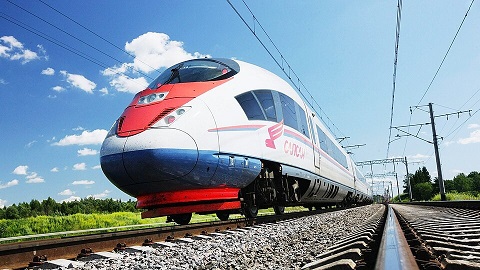
High-speed rail is steadily transforming India’s transport network.
Now, the country’s indigenous bullet train project has achieved an important milestone, bringing its development closer to the testing stage.
The B28 bullet train has successfully cleared a crucial squeeze test at BEML’s manufacturing facility in Bengaluru.
The test examined the strength and durability of the train’s outer structure under intense pressure. It also assessed how well the coaches could withstand heavy forces during a collision.
The squeeze test, also called a train body shell test, plays a vital role in passenger safety. During the process, engineers apply pressure to the coach structure.
Consequently, they can assess whether the body maintains its strength without excessive deformation. This helps protect the passenger compartment during an accident.
Meanwhile, B28 represents India’s efforts to develop its own high-speed rail technology. The Railway Ministry has decided to move ahead with indigenous trains rather than wait for Japan’s next-generation E10 Series Shinkansen.
BEML, a central government-owned company, is manufacturing the first two prototype trainsets.
Each B28 train will feature eight coaches. Moreover, the trainsets are designed to achieve a maximum operating speed of 249 kmph.
However, testing will assess their performance at speeds of up to 275 kmph. Officials expect the prototype to be ready within six months after completing the squeeze test.
According to reports, Indian Railways plans to begin B28 trials in May-June 2027.
The initial testing will take place along an approximately 100-km stretch between Surat and Vapi. This section forms part of the Mumbai-Ahmedabad High-Speed Rail Corridor.
Furthermore, the Railways aims to introduce passenger services on this stretch from August 2027. Earlier, the Railway Ministry had projected prototype readiness by the first quarter of 2027.
The Gujarat section of the high-speed corridor is targeted for completion by December 2027.
Meanwhile, the entire 508-km Mumbai-Ahmedabad corridor is expected to become operational by December 2030.
With the B28 project progressing, India is moving closer to building domestic expertise in high-speed rail manufacturing.
The upcoming trials will provide a crucial assessment of the train’s safety, performance and operational readiness.
Image Credit: Shilpy Arora, CC BY-SA 4.0, via Wikimedia Commons
You may also like


Image Reference: https://commons.wikimedia.org/wiki/File:Bullet-Train.jpg

Recent Posts
- Char Dham helicopter services face shutdown treat over DGCA rules
 A day after a helicopter crash in Chamoli district, the DGCA introduced stricter operating rules.
- India’s Indigenous Bullet Train Clears Key Safety Test
 According to reports, Indian Railways plans to begin B28 trials in May-June 2027.
- Cyclone Murasu Approaches, Chennai Braces for Heavy RainCoastal Tamil Nadu is on alert as Cyclone Murasu approaches, bringing heavy rainfall and strong winds across the region. With the storm expected to make landfall near Nellore on November 3, authorities have announced a school holiday in Chennai as a precautionary measure.
WeRIndia – A News Aggregator

Visit werindia.com for all types of National | Business | World | Politics | Entertainment | Health related news and much more..
Leave a Reply