

Bluetooth prank leaves e-rickshaw drivers stranded
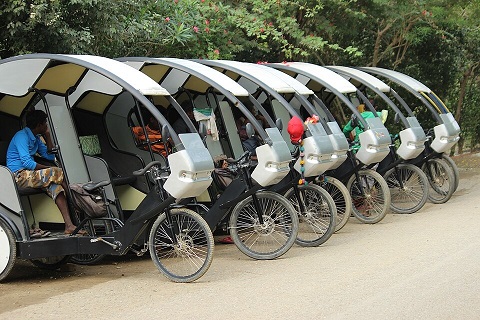
Technology has made transport more efficient. However, it has also exposed unexpected digital risks for everyday commuters and workers.
A disturbing trend has surfaced on social media, where pranksters misuse Bluetooth-enabled battery systems to disable moving e-rickshaws.
Instead of harmless entertainment, these acts leave drivers stranded on busy roads and cost them valuable income. Consequently, concerns over public safety and cybersecurity have grown rapidly.
The controversy revolves around mobile applications such as BAT-BMS and Epoch Li-ion. These apps can connect to Bluetooth-enabled lithium battery packs installed in many e-rickshaws.
Since several low-cost battery units lack passwords or authentication, anyone within roughly 10 to 15 metres can access the system. As a result, users can switch off the battery discharge function and instantly stop the vehicle.
Meanwhile, several digital creators have raised awareness about this vulnerability rather than promoting the prank.
They have shared videos explaining the issue and encouraged drivers to remain alert. Moreover, they have highlighted the financial and emotional impact on drivers who unknowingly become victims.
One of the social media influencers described one such incident. He noticed a driver towing his disabled e-rickshaw with another vehicle.
Suspecting the battery app was responsible, the influencer connected to the battery system and restored its settings. The vehicle started working again immediately.
The driver reportedly revealed that he had spent the entire day stranded. Furthermore, he had rented the e-rickshaw and lost nearly ₹400–₹500 in daily earnings.
The experience left both the driver and influencer emotional, underscoring the human cost behind the viral prank.
Following the growing number of such incidents, the Delhi Transport Department has launched an investigation into BAT-BMS and Epoch Li-ion.
Transport Minister Pankaj Singh and officials are assessing the security risks linked to unsecured Battery Management Systems. They are also considering possible restrictions to improve commuter safety and protect drivers’ livelihoods.
A Battery Management System acts as the electronic control unit of a lithium-ion battery. It monitors voltage, temperature, charging, and discharging to ensure safe operation. However, when Bluetooth access remains unprotected, outsiders can manipulate critical settings.
Therefore, drivers may find their vehicles completely unresponsive until someone restores the battery parameters, exposing a serious security gap that demands urgent attention.
Image Credit: Sanu N, CC BY-SA 4.0, via Wikimedia Commons
You may also like




Image Reference: https://commons.wikimedia.org/wiki/File:Electric_Rickshaws.jpg

Recent Posts
- Smog-Eating Roads: A New Approach to Tackling Air Pollution
 Photocatalytic coatings are a potential supplementary measure, not a complete solution to urban air pollution.
 - Nagastra-1R: India Boosts Precision Strike Power
 Nagastra-1R carries a one-kilogram high-explosive fragmentation warhead designed for soft-skinned targets.
 - Forest Worker Saves Elephants from Train CollisionA major railway accident was narrowly avoided in West Bengal after forest worker Akash Kerketta alerted authorities to a herd of elephants on the Bagdogra-Naxalbari railway line. His swift action helped move the elephants to safety before the approaching Sikkim Mahananda Express could collide with them.
WeRIndia – A News Aggregator

Visit werindia.com for all types of National | Business | World | Politics | Entertainment | Health related news and much more..