

India’s tax transformation: 12 years of change

Tax systems evolve with changing economic needs, and India’s income tax framework has witnessed major shifts over the past decade.
Over the last 12 years, the government has steadily reshaped tax administration and compliance.
As a result, taxpayers today experience a more digital, transparent, and simplified system.
These reforms have affected salaried employees, pensioners, investors, and businesses alike.
A major milestone arrived with the introduction of the new tax regime in 2020. It offered lower tax rates while removing most exemptions and deductions.
Taxpayers could choose between the old and new systems. However, the government gradually enhanced the new regime through higher rebates and increased standard deductions, making it more attractive.
Another landmark reform came with the implementation of the Income-tax Act, 2025. Effective from April 1, 2026, the new legislation replaced the six-decade-old Income-tax Act, 1961.
It streamlined provisions, reduced complexity, and improved ease of compliance. Consequently, taxpayers now navigate a more structured legal framework.
Tax relief also expanded significantly during this period. The rebate under Section 87A increased over time.
While Budget 2019 exempted taxable incomes up to ₹5 lakh, Budget 2025 extended the benefit further. Under the new tax regime, annual income up to ₹12 lakh now attracts no tax liability.
Meanwhile, technology became central to tax administration. Faceless assessments and appeals reduced direct interaction with officials.
Therefore, transparency improved, and harassment complaints declined. In addition, pre-filled income tax returns simplified filing by automatically capturing salary, interest, dividend, and TDS details.
The introduction of the Updated Return facility strengthened voluntary compliance. Taxpayers can now correct omissions or disclose additional income after filing returns.
Furthermore, they can revise returns for up to four years from the relevant assessment year.
Relief for salaried individuals also increased through higher standard deductions.
Currently, employees and pensioners can claim ₹75,000 under the new regime and ₹50,000 under the old regime without submitting expense proofs.
At the same time, authorities strengthened monitoring mechanisms. Banks, mutual funds, and financial institutions now report specified high-value transactions.
Additionally, new TDS and TCS provisions widened reporting requirements across multiple sectors.
Faster refund processing marked another notable improvement. Automation and digital systems have significantly reduced waiting periods.
Moreover, tools such as the Annual Information Statement and Taxpayer Information Summary provide taxpayers with a consolidated financial view.
Together, these reforms reflect India’s transition toward a technology-driven and taxpayer-friendly income tax ecosystem.
Image from Pxhere (Free for commercial use / CC0 Public Domain)
Image Published on March 27, 2017
You may also like


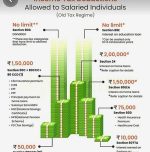

Image Reference:
https://pxhere.com/en/photo/1294393
Recent Posts
- Model Chai Wali: Brewing Success, One Cup at a Time
 The ‘Model Chai Wali’ journey is about more than selling tea.
 - Kuruvapur: The Sacred Abode of Shripad Shrivallabha
 Kuruvapur attracts seekers who wish to deepen their devotion and experience spiritual tranquillity.
 - Opposition Plans Supreme Court March Over ‘Vote Chori’ Row
 Earlier, leaders of several INDIA bloc parties had marched from Parliament to Vijay Chowk.
WeRIndia – A News Aggregator

Visit werindia.com for all types of National | Business | World | Politics | Entertainment | Health related news and much more..