

From mountain roads to electric skies

Innovation often begins with a simple need: finding a better way to overcome everyday challenges.
In Uttarakhand, that need has inspired an ambitious attempt to reshape travel across difficult mountain terrain.
Almora-based innovator Ravi Tamta has developed HAPIDA SKYNeX, a single-seat electric flying vehicle designed for personal transportation.
The prototype comes from his startup, Hapida Sky Private Limited. It has already completed initial test flights, marking a major step in his effort to turn the concept into reality.
The vehicle uses electricity instead of conventional aviation fuel. Tamta has built it around modified drone technology, adapting the system to support a human passenger.
This approach makes the project particularly interesting because it explores how drone-based technology could evolve into a new form of personal mobility.
Tamta’s idea grew from the travel difficulties faced by people in mountainous communities. Roads often wind through steep and challenging terrain, making short-distance journeys surprisingly time-consuming.
A 40-km road trip from his village can take about 90 minutes. He estimates that his flying vehicle could cover the same distance in roughly 10 to 15 minutes.
The prototype underwent flight testing in an open area in Almora. Tamta and his team handled the early demonstrations while continuing to develop the technology.
He has also shared footage of the project online, drawing wider public attention to his work.
The innovation has attracted interest beyond the local community. Uttarakhand Chief Minister Pushkar Singh Dhami shared a video of the prototype on X. Meanwhile, Tamta has rejected claims that the vehicle was imported from China.
He has instead invited journalists to visit his manufacturing unit and see the development process.
However, HAPIDA SKYNeX remains an experimental prototype. It is not yet available for commercial use.
Significant work will still be needed in areas such as safety, certification, reliability and practical operation.
Still, Tamta’s project highlights how home-grown innovation can target India’s unique transportation challenges.
If the technology matures, electric personal aircraft could eventually offer a faster way to connect remote mountain communities.
Image from Pxhere (Free for commercial use / CC0 Public Domain)
Image published on March 27, 2017
You may also like


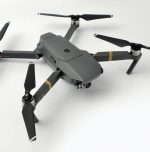
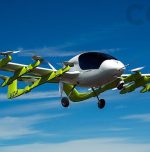
Image Reference: https://pxhere.com/en/photo/1290872
Recent Posts
- Opposition Plans Supreme Court March Over ‘Vote Chori’ Row
 Earlier, leaders of several INDIA bloc parties had marched from Parliament to Vijay Chowk.
 - Indian Navy to Commission Mangrol, Boosting Coastal Defence
 Mangrol incorporates more than 80 per cent indigenous content.
 - Eden Gardens Sets Guinness World Record on MahalayaMahalaya celebrations at Kolkata’s Eden Gardens made history as 3,000 dhakis played the dhak together, setting a Guinness World Record. The grand event on October 10 marked the beginning of Devi Paksha and the countdown to Durga Puja.
WeRIndia – A News Aggregator

Visit werindia.com for all types of National | Business | World | Politics | Entertainment | Health related news and much more..
Leave a Reply