

Where Aspirations Are Shared, Not Sold
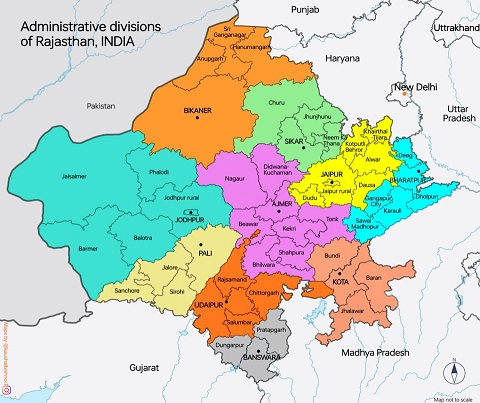
Across India, countless young people chase secure government jobs despite limited access to affordable preparation resources. However, in a small Rajasthan town, a quiet shift is changing that reality.
In Merta, Nagaur district, a government school teacher has built a community-led learning space.
Nirmal Sharma, a history lecturer, started this initiative to support rural aspirants and their aspirations. Instead of expensive coaching, his model focuses on shared effort and mutual growth.
Since 2016, Sharma has run “VR” from his home. The name reflects persistence, teamwork, and purpose.
Unlike typical institutes, it avoids rigid roles. Students are called “stars,” while mentors are known as “icons.” This approach builds respect and removes hierarchy.
Moreover, the system relies on peer learning. Each student studies a topic and teaches it within two weeks.
As a result, understanding deepens, and confidence grows. Every batch includes around 35 to 40 students. Currently, about 65 learners are preparing in two groups.
Interestingly, those who succeed return to guide others without payment. Therefore, the model sustains itself through continuous contribution.
Sharma’s idea came from his own struggles. Unable to afford coaching, he once studied in a group where friends taught each other. That effort helped him secure a teaching job in 2011.
Over time, the initiative expanded. Since its informal beginnings in 2007, it has produced nearly 200 successful candidates.
Many became clerks, teachers, or joined public departments like the Railways and the Forest Services. A few even reached Secretariat-level roles.
In addition, the institute promotes values beyond academics. If a student misses class without notice, they must bring food for someone in need.
Birthdays are celebrated together, creating a family-like environment. When someone succeeds, their family is honoured instead of the individual.
Financially, the model remains simple. Each student contributes ₹200 monthly for basic expenses.
This ensures commitment without creating barriers. Admissions, however, are referral-based, maintaining trust within the group.
This initiative proves that success does not require expensive systems. Instead, it thrives on collaboration, discipline, and a strong sense of community.
Image Credit: Kaushal Bishnoi, CC BY-SA 4.0, via Wikimedia Commons
You may also like



Image Reference:
https://commons.wikimedia.org/wiki/File:Administrative_divisions_of_Rajasthan.png

Recent Posts
- Night Vision Problems? Protect Your Eyes Naturally with these tips
 A balanced diet, regular eye care and safer driving habits support healthy vision.
 - EPF Withdrawal Rules Simplified: Check Limits and Eligibility
 The simplified framework provides greater flexibility for accessing EPF savings.
 - CSIR-NCL Recruitment 2026: 24 MTS Vacancies
 CSIR-NCL will conduct a competitive written examination for provisionally eligible candidates.
WeRIndia – A News Aggregator
Visit werindia.com for all types of National | Business | World | Politics | Entertainment | Health related news and much more..