

WeVOIS: Making Waste Management Smarter
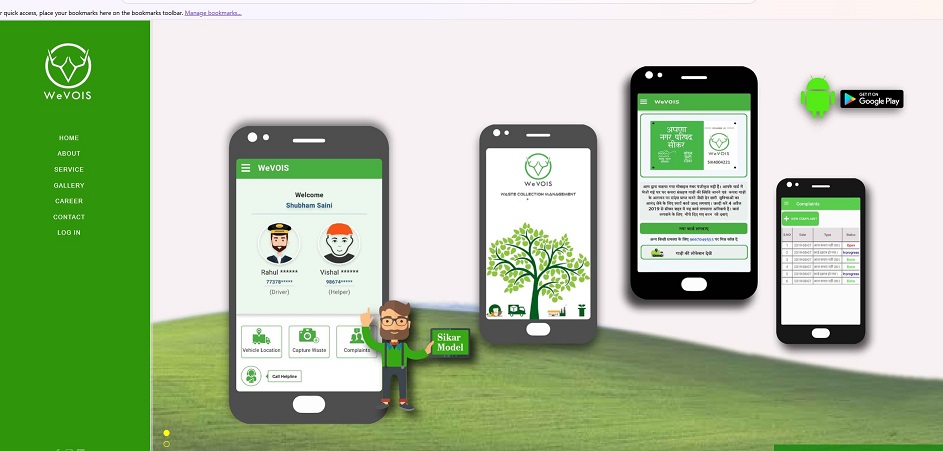
India’s waste problem is growing, but Jaipur-based startup WeVOIS Labs is using technology and organised operations to tackle it.
Founded by Abhishek Gupta and Abhinav Shekhar Vashistha, the company aims to make waste collection more transparent, efficient and inclusive.
The idea took shape after the founders led a cleanliness campaign during their engineering days in 2014.
Their experience exposed gaps in urban waste management. They noticed poor tracking, overflowing waste sites and limited support for sanitation workers.
Later, they spent a day working alongside sanitation teams in Sikar, Rajasthan. That experience convinced them that technology alone would not solve the problem. Better ground operations and worker support were equally important.
WeVOIS officially began operations in 2019 after testing its model in Sikar. Today, it operates across more than 36 cities and reaches over 46 lakh citizens daily.
The company says it has managed more than seven lakh tonnes of waste and supports over 2,000 sanitation workers and field staff.
Its technology creates visibility across the waste collection process. WeVOIS digitally maps properties and uses RFID tags to track collections.
Drivers receive planned routes, while residents can get alerts about approaching collection vehicles. Supervisors and authorities can monitor routes, attendance and vehicle movement through a central dashboard.
The startup also focuses on what happens after collection. Wet waste goes for composting, while dry waste reaches material recovery facilities.
There, workers separate recyclable materials such as plastic, paper, metal, glass and textiles. Non-recyclable waste can be converted into refuse-derived fuel, reducing dependence on landfills.
The benefits extend beyond waste processing. WeVOIS provides workers with more structured employment, training and digital tools.
Some employees have reported higher incomes, better working hours and improved social respect. The company has also created specialised opportunities through textile recycling.
However, scaling the model remains challenging. Every city has different infrastructure, waste patterns and operational needs.
Building efficient collection systems also requires cooperation from citizens, municipalities and processing partners.
Despite these hurdles, WeVOIS is targeting 100 zero-waste cities. Its approach combines technology, recycling infrastructure and worker welfare.
The startup is therefore attempting to transform waste management from a disposal service into a more organised and resource-focused urban system.
Image Credit: Wevois Website Screenshot
You may also like



Image Reference: https://www.wevois.com/
Recent Posts
- WeVOIS: Making Waste Management Smarter
 WeVOIS digitally maps properties and uses RFID tags to track collections.
 - UPI MDR vs Card Charges: What Merchants Will Pay
 The new MDR applies to merchants accepting eligible high-value UPI payments.
 - Indowud NFC: Waste to Wood
 Indowud has further demonstrated the material’s potential through real-world projects.
WeRIndia – A News Aggregator

Visit werindia.com for all types of National | Business | World | Politics | Entertainment | Health related news and much more..
Leave a Reply