

Ring of fire eclipse to grace skies on February 17
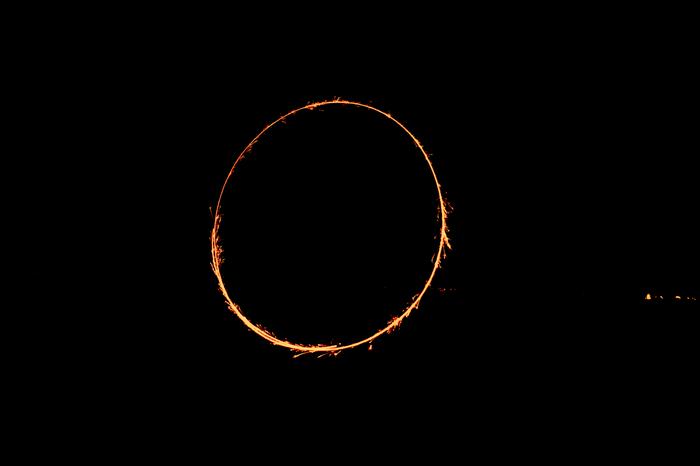
A dramatic celestial display will unfold on February 17, 2026, as an annular solar eclipse appears over parts of the Southern Hemisphere.
Unlike an ordinary partial eclipse, this event will produce a luminous halo around the Moon, commonly known as the “Ring of Fire.”
Solar eclipses occur when the Moon passes directly between Earth and the Sun. During this rare alignment, the Moon blocks sunlight and casts a moving shadow across Earth’s surface.
However, not all eclipses look the same. Their appearance depends largely on the Moon’s distance from Earth at the time of alignment.
In an annular eclipse, the Moon is near apogee, its farthest orbital point from Earth. Because it appears slightly smaller in the sky, it cannot entirely cover the Sun.
Consequently, a bright ring of sunlight remains visible around the Moon’s edges. This glowing outline distinguishes it from a total solar eclipse, where the Sun disappears completely for a brief period.
By comparison, a partial eclipse only obscures a section of the Sun, creating a crescent-like shape.
The February 17 eclipse will commence at 09:56 UTC, with maximum alignment expected at 12:12 UTC. Nevertheless, the exact experience will vary depending on location.
The full annular phase will occur mainly over isolated stretches of Antarctica. Meanwhile, several regions across the Southern Hemisphere will witness a partial eclipse.
Southern African cities such as Cape Town and Durban are positioned for partial visibility. Zimbabwe and Tanzania may also observe the event.
In South America, parts of southern Argentina and Chile fall within the partial viewing zone. Island nations, including Madagascar and Mauritius, are likewise expected to see partial coverage.
India, however, will miss this astronomical event. At the time of peak alignment, the Sun will be below the horizon there.
Observers in viewing regions should prioritise safety. Proper solar filters or certified eclipse glasses are essential to prevent eye damage while watching this striking cosmic phenomenon.
Image by Nico from Pxhere (Free for commercial use / CC0 Public Domain)
Image Published on February 29, 2020
You may also like




Image Reference: https://pxhere.com/en/photo/1604707
Recent Posts
- HealthFab: Sustainable Period Care
 HealthFab was founded by Kiriti Acharjee, Saurav Chakraborty and Satyajit Chakraborty, all from Assam.
 - Smart Ways to Manage Medical Expenses
 Unexpected medical expenses can disrupt even a carefully planned household budget. When a ₹5 lakh hospital bill leaves a ₹3 lakh shortfall after insurance settlement, families may feel pressured to…
 - YLEM: Turning Waste into Sustainable Design
 New Delhi-based design and research studio that transforms discarded materials into valuable, functional products.
WeRIndia – A News Aggregator

Visit werindia.com for all types of National | Business | World | Politics | Entertainment | Health related news and much more..