

Edybites: Spoons You Can Eat
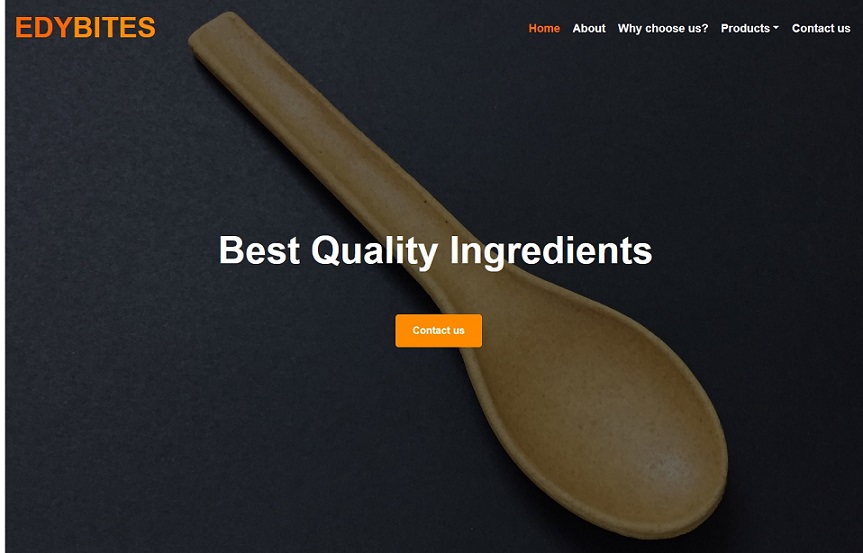
What if the spoon you use to finish your meal could become your final bite instead of ending up in a dustbin?
A Mumbai-based startup is turning this simple idea into an innovative alternative to single-use plastic cutlery.
Founded in 2022 by Rupesh K Sanghvi, Edybites manufactures edible spoons using a millet and flour-based formulation.
The product offers an alternative to conventional disposable spoons, which often contribute to plastic waste after just a few minutes of use.
The idea emerged during the COVID-19 lockdown. While preparing meals at home, Sanghvi once found himself eating with his fingers because no clean spoons were available.
This reminded him of a familiar Gujarati food combination involving khakra and dal khichdi. He began wondering whether a spoon could also become something people could eat.
However, transforming this thought into a functional product required considerable experimentation. Sanghvi reportedly went through 88 failed attempts before developing a spoon with the right shape, strength and texture.
The edible cutlery uses ingredients such as sorghum, corn flour and wheat flour. The formulation aims to make the spoons sturdy enough to hold food while remaining comfortable to bite into.
Edybites has also introduced different flavours, including chocolate, making the product suitable for desserts such as ice cream.
Unlike ordinary disposable cutlery, these spoons offer two possibilities. Consumers can eat them after finishing their meals or allow them to decompose naturally if left uneaten. The product has an estimated shelf life of three months without refrigeration.
The innovation also has potential applications beyond household dining. Airlines, hospitals, schools, catering businesses and event organisers could explore edible cutlery as an alternative to conventional disposable spoons.
According to Sanghvi, each spoon currently costs around ₹7-8. This remains a major challenge because conventional plastic spoons are considerably cheaper.
Packaging is another concern, as the edible products require protection against moisture and breakage.
Despite these hurdles, Edybites has reportedly sold or distributed more than 5,100 spoons. The startup estimates that replacing one lakh conventional plastic spoons could potentially displace 250-300 kg of single-use plastic.
By turning an everyday eating accessory into an edible product, Edybites is exploring a different approach to waste reduction.
Its innovation shows how rethinking even the smallest objects in our daily lives can create opportunities for more sustainable consumption.
Image Credit: Edybites Website Screenshot
You may also like



Image Reference: https://www.edybites.com/
Recent Posts
- Edybites: Spoons You Can Eat
 The innovation also has potential applications beyond household dining.
- Quad Leaders Push for a Stronger Indo-Pacific Partnership
 The leaders appeared together for a group photograph before their scheduled high-level discussions.
- Delhi House Collapse Claims Two Lives, Four InjuredA two-storey residential building collapsed in Shahdara’s Jwala Nagar area on Tuesday morning, triggering an emergency rescue operation. The incident claimed two lives, including a three-year-old child, while four others suffered injuries and were rushed to Dr Hedgewar Hospital.
WeRIndia – A News Aggregator
Visit werindia.com for all types of National | Business | World | Politics | Entertainment | Health related news and much more..
Leave a Reply