

Seebi Narasimha Temple: A Sacred Karnataka Shrine
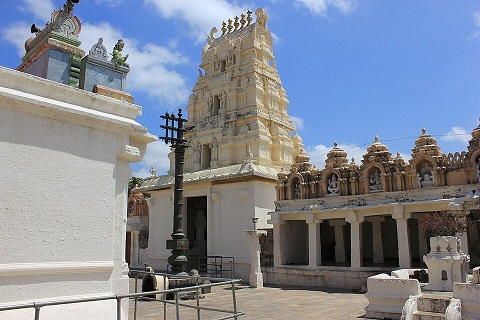
Located in Seebi village, around 20 kilometres north of Tumakuru in Karnataka, the Seebi Narasimha Temple is a revered shrine known for its unique form of worship and rich mythological significance.
Dedicated to Lord Narasimha, the fourth incarnation of Lord Vishnu, the temple holds a special place among devotees seeking divine protection, prosperity and relief from obstacles.
The Unique Significance of Lord Narasimha
According to local tradition, Seebi was once the vanaprastha ashram of Shibi Chakravarthy, the grandson of Prahlada, the great devotee of Lord Vishnu.
Shibi Chakravarthy wished to worship Lord Narasimha, and the deity manifested here in the form of a Narasimha Shaligrama.
Unlike temples where devotees worship an idol of the deity, the principal object of worship at Seebi is this sacred Shaligrama.
It is unusually large, described as being larger than a Shiva linga, and faces the northeast. This distinctive form makes the temple particularly significant for devotees of Lord Narasimha.
Tradition also holds that Lord Rama worshipped this Shaligrama while seeking blessings for progeny. Chandrahasa, a king associated with the region, is likewise believed to have worshipped the deity to overcome obstacles.
The History Behind the Temple
The present temple was built in 1797 during the Mysore kingdom under Mummudi Krishnaraja Wadiyar.
Fauzdar Nallappa, a Brahmin official, initially intended to construct a memorial honouring his parents, Kacheri Krishniah and Alamelamma.
According to legend, Lord Narasimha appeared in Nallappa’s dream and instructed him to build a temple at Seebi, where the sacred Shaligrama was not receiving regular worship.
Nallappa followed the divine instruction, and construction reportedly continued for ten years.
The temple’s painted walls feature scenes from the Ramayana, Mahabharata and Dashavatara, depicting important episodes from Hindu mythology.
Although some paintings have deteriorated over time, they remain an important part of the temple’s artistic heritage.
Gaja Pushkarini and Goddess Lokamba Devi
The temple complex also features Gaja Pushkarini, a sacred water tank associated with the Gajendra Moksha episode. This story recounts Lord Vishnu’s intervention to rescue Gajendra, the elephant devotee, from danger.
Additionally, Goddess Lokamba Devi resides within the temple’s enclosure. Devotees believe that performing Kalyanotsava, a ceremonial divine wedding, can help unmarried men and women find suitable life partners.
Festivals and Religious Celebrations
Brahmarathotsava is among the temple’s major annual celebrations and is associated with the Poorva Phalguni nakshatra during Magha month.
A grand local fair, or Jaatre, takes place for three days before and three days after the main festival. Mahabhisheka and Kalyanotsava are other important religious observances.
For devotees, Seebi Narasimha Temple is more than a place of worship.
Its sacred Shaligrama, mythological associations, historic architecture and traditional festivals make it an important spiritual destination near Tumakuru.
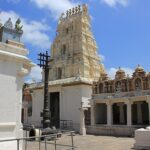
Image Credit: Dineshkannambadi, CC BY-SA 4.0, via Wikimedia Commons
You may also like

Image Reference: https://commons.wikimedia.org/wiki/File:Dravidian_style_gopura_(tower)_over_entrance_into_the_Narasimha_Swamy_temple_at_Seebi.jpg

Recent Posts
- At 81, this woman earns medals after learning to swim at 68
 Subbalakshmi's journey began with an unexpected challenge from her grandson, who lives in the United States.
- Seebi Narasimha Temple: A Sacred Karnataka Shrine
 For devotees, Seebi Narasimha Temple is more than a place of worship.
- IndiGo to shift 12 international routes to Navi Mumbai by July 2027
 IndiGo plans to support its expanding network with its Airbus A320, A321 and A321XLR fleet.
WeRIndia – A News Aggregator

Visit werindia.com for all types of National | Business | World | Politics | Entertainment | Health related news and much more..
Leave a Reply