

From waste to wealth: A farmer’s energy revolution
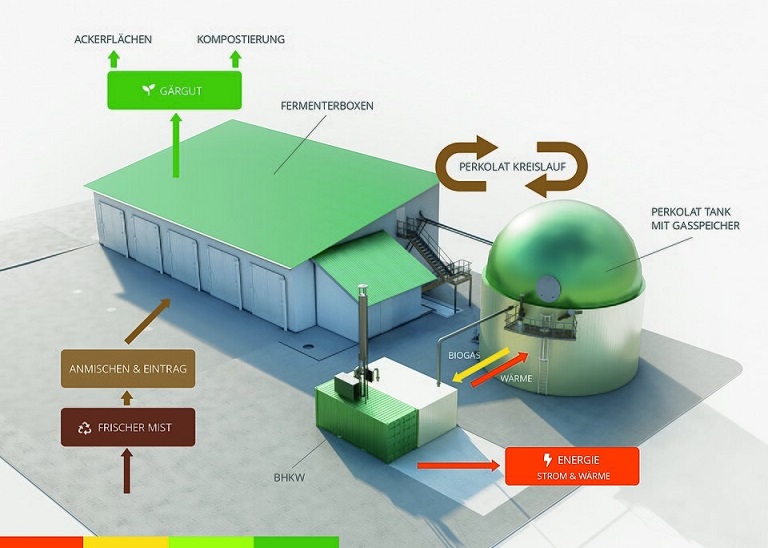
Innovation often begins where necessity meets imagination, and one farmer’s journey proves just that.
In the heart of Madhya Pradesh, Devendra Parmar redefined how energy can be produced and consumed.
Instead of chasing rising fuel prices, he turned inward, towards resources already present on his farm.
While many struggled with soaring petrol and LPG costs, Parmar saw opportunity in cattle waste. He transformed it into bio-CNG, electricity, and organic by-products.
As a result, his farm became more than a source of crops; it evolved into a self-sustaining energy hub.
This shift not only reduced dependence on fossil fuels but also created a steady income stream.
Interestingly, the model works on a simple yet powerful idea: nothing goes to waste. Animal dung feeds biogas plants, which then generate clean fuel and power.
Meanwhile, the leftover slurry becomes high-quality organic fertilizer. Therefore, every output feeds back into the system, creating a circular economy at the grassroots level.
What sets this innovation apart is its scalability. Parmar now earns nearly ₹3 lakh every month, proving that sustainability can also drive profitability.
Moreover, his approach reduces carbon emissions and cuts input costs for farming. In a time when climate concerns are rising, such models offer both environmental and economic relief.
Additionally, this experiment challenges conventional thinking about rural development. Instead of relying on external energy sources, villages can produce their own.
With the right support, similar systems could transform India’s agricultural landscape. They could empower farmers, reduce imports, and strengthen local economies.
However, the larger question remains: can this model be replicated widely? It requires awareness, initial investment, and policy backing.
Yet, the potential is undeniable. If adopted at scale, such innovations could bridge the gap between sustainability and livelihood.
Parmar’s story is not just about one farmer’s success. Rather, it reflects a broader shift toward self-reliance and smart resource use.
Sometimes, the most powerful solutions are not discovered elsewhere; they are cultivated right where we stand.
Image Credit: Thzorro77, CC BY-SA 4.0, via Wikimedia Commons
You may also like


Image Reference: https://commons.wikimedia.org/wiki/File:Anaerobic_Digestion_Biogas_Plant_-_Massflow_Scheme.jpg

Recent Posts
- Everyday Habits That May Harm Your Brain Health
 Adequate sleep allows the brain to recover, process information and support memory.
 - Top 10 investment schemes in India that benefit from compounding
 A compound interest calculator can help estimate how investments may grow over time.
 - DGFT Hyderabad Recruitment 2026: Salary ₹60,000 Per Month
 The recruitment is for two Young Professional vacancies in Hyderabad, with a monthly remuneration of ₹60,000.
WeRIndia – A News Aggregator

Visit werindia.com for all types of National | Business | World | Politics | Entertainment | Health related news and much more..