

Breathing Innovation: How a teen turned algae into clean indoor air
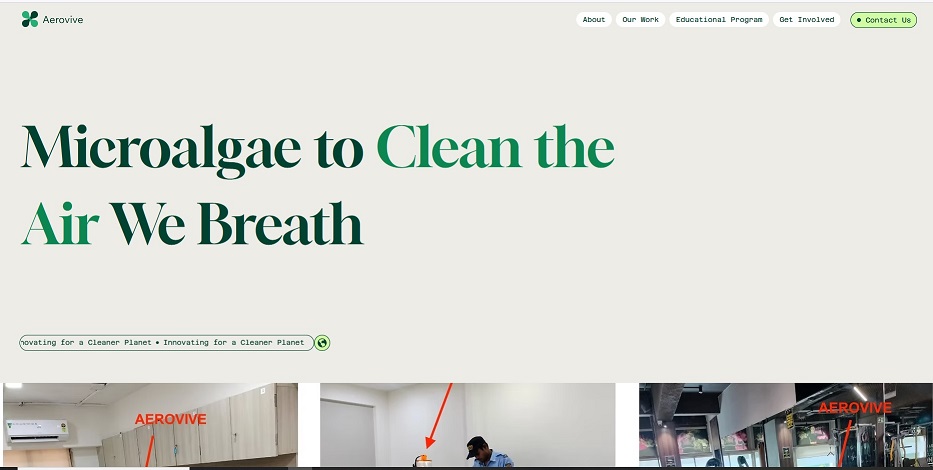
Indoor air often goes unnoticed, yet it quietly shapes how people think, feel, and perform each day.
At 14, Hridank Garodia began feeling mentally foggy during school hours. He suffered headaches, low attention, and constant fatigue.
However, the symptoms vanished whenever he stepped outside. Gradually, he realised the problem was not stress or studies, but poor indoor air quality.
Classrooms with many occupants accumulate carbon dioxide without proper ventilation. As a result, rising CO₂ levels reduce alertness and impair cognitive function.
Since carbon dioxide is invisible, the cause often goes undetected. This discovery struck Hridank deeply and sparked a personal mission.
Already interested in microbiology, he began experimenting with microalgae. These organisms absorb carbon dioxide and release oxygen through photosynthesis.
By late 2022, jars of algae filled his study table. Initially, the results were promising. CO₂ levels dropped, and the air felt fresher. However, the system lacked stability. Nutrients depleted, algae fluctuated, and results never lasted long.
Over the next six months, Hridank refined his experiments in his school lab. With guidance from his chemistry teacher, he adjusted light, airflow, and nutrients.
Each trial was carefully documented and repeated. The challenge was not theory, but long-term balance.
By mid-2023, he developed a functional prototype. Yet it remained fragile.
Support from family, IIT Bombay faculty, and scientist Dr Mukund Chorghade helped refine the design.
By late 2023, a sturdier third prototype emerged. Hridank named it Aerovive.
Aerovive draws indoor air into an algae-filled chamber. The algae absorb carbon dioxide, release oxygen, and trap fine particles. Sensors monitor conditions to maintain balance.
In crowded rooms, CO₂ drops from 1,200-1,500 ppm to about 800–900 ppm. This equals the effect of nearly 40 houseplants in one unit.
Launched in December 2024, Aerovive was installed at seven Mumbai locations. Gyms reported quicker recovery and improved stamina.
Schools recorded a 24% rise in attention and clarity. Clinics noted greater comfort. Today, 700–900 people benefit daily.
Beyond Aerovive, Hridank founded the Invisible Heroes Lab. Through it, over 1,050 students now explore beneficial microbes hands-on.
Recognised as a top 100 finalist at the IRIS National Fair, the project has a published patent and a ₹10 lakh letter of intent.
Hridank’s journey proves that small organisms, guided by curiosity, can create powerful change.
Image Credit: Theaerovive Website Screenshot
You may also like



Image Reference: https://www.theaerovive.com/
Recent Posts
- Navratri Fasting 2026: Eat Right, Stay Energised
 Fasting requires caution for people with diabetes, heart conditions or other medical problems.
 - GST Council Pushes Faster Compliance and Refunds
 The GST Council is examining measures to make GST compliance easier for small taxpayers.
 - SBI SCO Recruitment 2026 for Wealth Management posts
 Candidates must register and pay the application fee online through the SBI recruitment portal.
WeRIndia – A News Aggregator

Visit werindia.com for all types of National | Business | World | Politics | Entertainment | Health related news and much more..