

Voter Roll Revision Begins Ahead of 2027 Polls
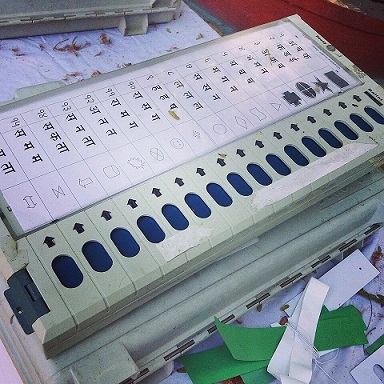
Accurate electoral rolls form the foundation of a fair and inclusive election.
With several states preparing for Assembly polls, the Election Commission of India has launched a fresh revision exercise to update voter records before the next qualifying date.
The Special Summary Revision (SSR) will cover 17 states and Union Territories, including Uttar Pradesh, Uttarakhand, Punjab, Manipur and Goa.
The exercise aims to enrol eligible citizens, particularly young and first-time voters. Additionally, it seeks to remove duplicate entries and the names of deceased voters.
The revision follows a standard procedure for electoral registration. According to the Commission’s order, eligible citizens must submit Form 6 to seek inclusion in the electoral rolls.
Notably, the order does not mention the additional declaration associated with the Special Intensive Revision (SIR).
The Commission clarified this distinction on October 7. It stated that the additional declaration applies only in states and Union Territories where the SIR process is underway.
Elsewhere, authorities will continue using the prescribed forms under the Registration of Electors Rules, 1960.
Meanwhile, the Commission has outlined a clear schedule for the exercise. Draft electoral rolls will be published on November 12, 2026.
Citizens can submit claims and objections until December 11. Subsequently, the final electoral rolls are scheduled for publication on January 4, 2027.
However, states currently undergoing the SIR, or those that have recently completed it, will follow a separate timetable. This distinction allows the Commission to manage the two revision processes independently.
The exercise comes amid continuing legal and political debate over the SIR procedure. Several opposition leaders had sought a meeting with Chief Justice of India Surya Kant.
They wanted to raise concerns about the process and demand the resignation of Chief Election Commissioner Gyanesh Kumar.
The Chief Justice declined the request, citing the matter’s sub judice status. He indicated that the concerned parties could seek appropriate relief through the courts.
As the revision progresses, eligible voters will need to verify their details and complete the required formalities within the stipulated deadlines.
Ultimately, the exercise’s effectiveness will depend on accurate records, accessible registration procedures and timely resolution of objections.
Image Credit: AbhiSuryawanshi, CC BY-SA 4.0, via Wikimedia Commons
You may also like


Image Reference: https://commons.wikimedia.org/wiki/File:Voting_machine_in_India.jpg

Recent Posts
- CSIR-NCL Recruitment 2026: 24 MTS Vacancies
 CSIR-NCL will conduct a competitive written examination for provisionally eligible candidates.
 - Voter Roll Revision Begins Ahead of 2027 Polls
 Citizens can submit claims and objections until December 11.
 - Assam Artist Creates Durga Idol Using 50,000 Safety PinsBlending devotion with extraordinary creativity, an artist from Assam has transformed thousands of ordinary safety pins into a stunning idol of Goddess Durga. Sanjib Basak, a government employee from Dhubri, spent over three months crafting the unique creation, which will be displayed at Rashmi Sangha Puja Mandap in Panchmor.
WeRIndia – A News Aggregator
Visit werindia.com for all types of National | Business | World | Politics | Entertainment | Health related news and much more..
Leave a Reply